When a Workplace Injury May Involve a Third-Party Claim
Workers compensation and third-party injury claims can apply to the same workplace injury when an outside person or company contributed to the harm. Atlanta Auto Law evaluates the workplace facts, identifies potentially responsible third parties, and explains how the claims may proceed together.
Written by Ronnie Mabra
Request an EstimateHow Workers Compensation and Third-Party Claims Differ
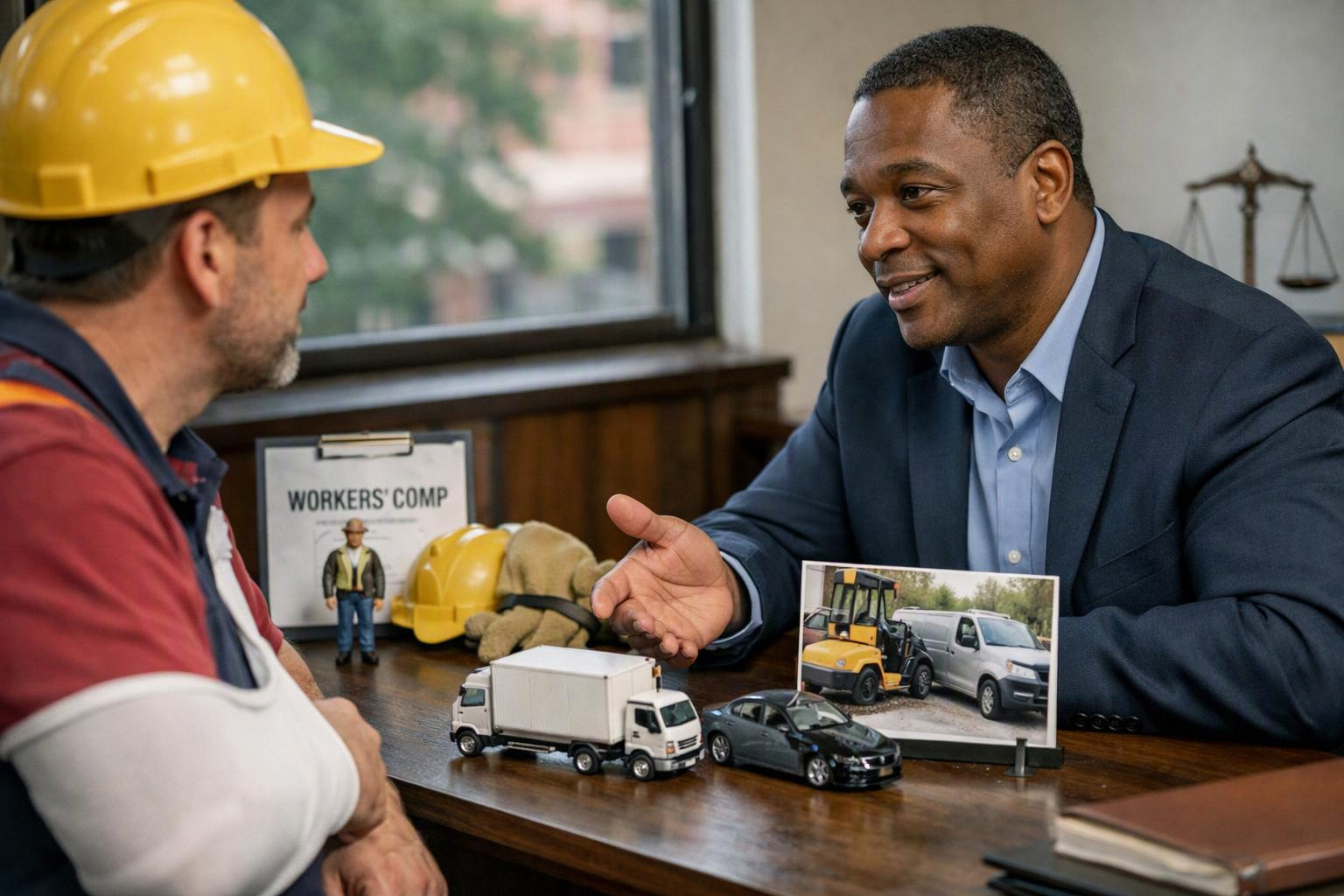
Workers compensation is an employment injury claim that may provide medical care and wage replacement for a work-related injury without requiring proof that the employer caused the harm. The claim usually involves the employer and its workers compensation insurer.
A third-party claim is a personal injury claim against an outside person or company whose negligence contributed to the workplace injury. The third party may include a subcontractor, property owner, equipment manufacturer, driver, or another business.
The legal responsibility in a third-party claim depends on fault, negligent conduct, unsafe property, defective equipment, or another cause of the accident. We investigate how the workplace injury happened and identify which claim may address each part of the harm.
Can You File Both Claims for the Same Workplace Injury?
Yes, a worker may be able to pursue workers compensation benefits and a third-party personal injury claim when an outside party contributed to the injury, but the claims address different legal responsibilities and may affect each other.
Dual recovery is not automatic because workers compensation benefits and a personal injury claim cover different losses under different rules. We review the facts before deciding how to coordinate the claims.
A third-party claim may seek damages that workers compensation does not provide, such as pain and suffering. The third-party insurer may dispute liability, so the claim still requires evidence that connects the outside party's conduct to the injury.
When You May Need Both Claims Together
Workers compensation and a third-party claim may proceed together when someone outside the employment relationship helped cause the workplace injury. Common situations include the following.
We connect the accident facts to the correct legal theories, including premises liability, product liability, subcontractor liability, or a motor vehicle injury claim. Our construction accident claims service addresses workplace incidents where several companies may share responsibility.
How the Two Claims Work Together
Claim coordination keeps the workers compensation and third-party matters consistent while each follows its own process. We communicate with the workers compensation insurer and the third-party insurer as the investigation develops.
Medical records help document the injury, treatment, prognosis, and need for future medical care. Lost wages and work restrictions help show the financial effect of the injury.
Liability evidence serves a different purpose from medical proof. We preserve photographs, statements, inspection information, and other records that may show how the outside party caused or contributed to the accident.
What Each Claim May Cover
Workers compensation and third-party damages may overlap in some areas, but they do not provide the same types of recovery. The following comparison shows how the claims commonly differ.
| Loss or benefit | Workers compensation | Third-party claim |
|---|---|---|
| Medical expenses | May cover reasonable, injury-related medical care under applicable workers compensation rules. | May include past and future medical expenses caused by the third party's fault. |
| Lost wages | May provide wage replacement subject to the governing claim rules. | May seek lost income and reduced earning ability caused by the injury. |
| Pain and suffering | Generally does not provide a separate recovery for pain and suffering. | May include damages for physical pain, emotional distress, and loss of normal activities. |
| Permanent impairment | May address an impairment under workers compensation standards. | May support damages for lasting limitations and reduced quality of life. |
| Future losses | May provide benefits for approved future medical care or qualifying wage loss. | May seek future medical expenses, lost earning capacity, and other damages linked to third-party liability. |
The available recovery depends on the injury, medical proof, employment impact, insurance coverage, and evidence of fault. We evaluate each category before discussing a settlement.
How a Third-Party Claim Can Affect Workers Compensation Benefits
A workers compensation lien may give the workers compensation insurer a right to seek reimbursement from settlement proceeds connected to the same injury. The amount and treatment of that lien depend on the benefits paid, the settlement allocation, and applicable law.
Subrogation and reimbursement rights can affect the net recovery from a third-party settlement. We address those issues during settlement negotiations and work to make sure the proposed allocation accurately reflects the claims.
Settlement approval may be needed before the workers compensation lien is resolved. We coordinate with the relevant parties so the settlement terms account for the insurer's interest and the injured worker's remaining recovery.
What We Review Before Pursuing a Third-Party Claim
Our accident investigation focuses on who controlled the location, equipment, vehicle, or work activity that led to the workplace injury. We use the available records to test the proposed third-party liability.
We also examine insurance coverage and the relationship among the employer, general contractor, subcontractor, property owner, and equipment manufacturer. That review helps us determine whether a personal injury claim can proceed against an outside party.
How We Coordinate the Claims Process
We coordinate the claims so the evidence, medical treatment, and settlement discussions support a consistent account of the injury. The process may involve these connected tasks.
Claim communication also matters because statements to an insurer may affect both matters. We help keep communications focused on accurate facts while the claim investigation continues.
What to Do After a Workplace Injury Involving Someone Else
Medical treatment should come first after a workplace injury involving another person or company. Tell the medical team how the injury occurred and follow the treatment plan so the records accurately reflect the condition.
Make a workplace report and identify the third party as soon as you safely can. Preserve photographs, names, messages, equipment information, and insurance information without altering or discarding potential evidence.
Do not assume workers compensation benefits prevent a personal injury claim. A legal consultation can help determine whether the outside party's negligence created a separate claim and how evidence preservation should proceed.
How Atlanta Auto Law Evaluates Your Claim
Atlanta Auto Law evaluates your claim by reviewing the workplace facts, the injury records, and the conduct of every possible third party. We determine whether the matter involves construction accident claims, product liability, premises liability, or a motor vehicle collision.
Our team investigates third-party liability and coordinates the personal injury claim with workers compensation. We explain how medical expenses, lost wages, pain and suffering, permanent impairment, future losses, and reimbursement issues may affect the case.
We use the case evaluation to identify the responsible parties, preserve evidence, and develop a settlement position supported by the available proof. The legal strategy depends on the facts of the workplace accident and the applicable claim rules.
Contact Atlanta Auto Law for a case evaluation about a workplace injury involving an outside party.
Get a Free EstimateAuthor: Ronnie Mabra
Questions About Workplace Injury and Third-Party Claims
Who counts as a third party in a workplace injury claim?
Atlanta Auto Law treats a third party as an outside person or company that may have contributed to a workplace injury, such as a subcontractor, property owner, equipment manufacturer, driver, or another business.
Can I sue my employer for a workplace injury?
Workers compensation rules often control claims against an employer, while a separate personal injury claim may exist against an outside party. The answer depends on the employment relationship, the facts of the accident, and applicable law.
What happens if the third party denies responsibility for my workplace injury?
A denied third-party claim requires a focused liability investigation using incident reports, witness statements, photographs, contracts, maintenance records, product records, and medical evidence. The workers compensation claim may continue while the third-party dispute is evaluated.
Does workers compensation pay for pain and suffering?
Workers compensation generally does not provide a separate recovery for pain and suffering. A third-party personal injury claim may seek those damages when the outside party's fault can be proven.
What evidence helps prove a third-party workplace injury claim?
Evidence that may help includes accident records, witness statements, photographs, contracts, maintenance records, product records, medical documentation, and information showing who controlled the work area or equipment.