Common Mistakes That Can Hurt a Personal Injury Claim
Personal injury claim mistakes to avoid include delaying medical care, missing legal deadlines, discarding evidence, discussing fault publicly, and accepting a settlement before the full impact is understood. Atlanta Auto Law reviews the facts, evidence, damages, and communications that can affect a claim.
Written by Ronnie Mabra
Request an EstimateWhich Mistakes Can Hurt a Personal Injury Claim?
Personal injury claims can weaken when mistakes affect proof of negligence, liability, medical causation, damages, or available legal options. A missed record or careless statement can give an insurance company grounds to challenge what happened or how seriously you were hurt.
Our team reviews the accident evidence, medical records, communications, and financial losses together. That approach helps us identify gaps before they affect settlement negotiation or a potential injury lawsuit.
Learn more about how we handle a personal injury attorney matter from investigation through resolution.
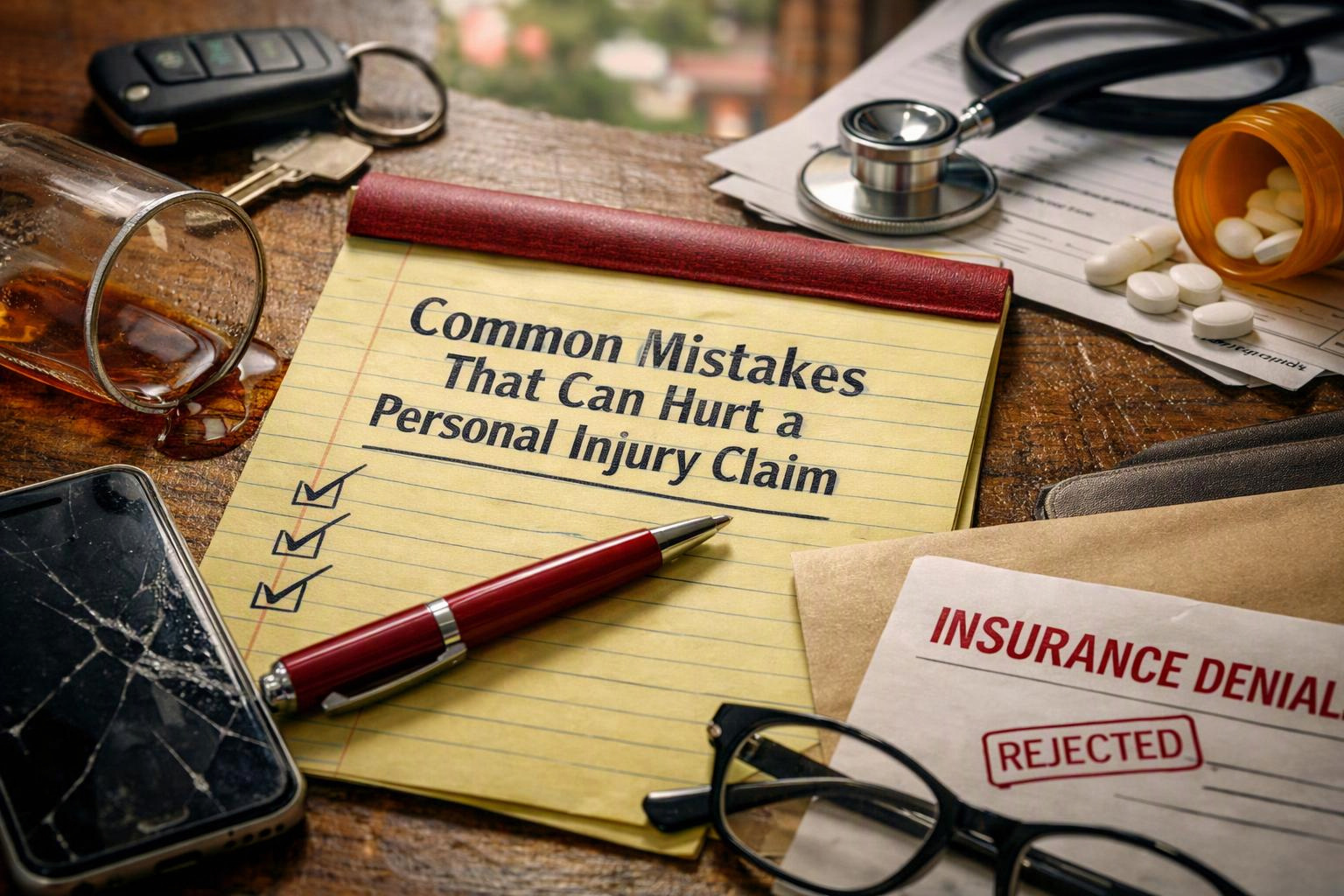
Personal Injury Claim Mistakes at a Glance
The table below connects each common claim mistake with its cause, risk, and practical response. Preserving personal injury evidence early gives our team more material for liability analysis and damage documentation.
| Mistake | Why It Happens | Claim Risk | Corrective Action |
|---|---|---|---|
| Delaying medical care | Symptoms seem minor or life is busy. | Medical causation becomes harder to prove. | Follow the treatment plan and keep records. |
| Losing accident evidence | The scene changes or records are overlooked. | Liability and damages become disputed. | Preserve photographs, reports, and witness details. |
| Posting on social media | People share updates without considering their claim. | Posts may be taken out of context. | Avoid discussing the accident or injury online. |
| Speaking about fault without guidance | An insurance adjuster requests a quick account. | A statement may be used to challenge liability. | Keep communications factual and seek legal review. |
| Accepting an early settlement | Immediate funds may seem helpful. | Future care and long-term harm may be left unpaid. | Review the offer after the injury and losses are understood. |
| Missing a legal deadline | Filing rules can be easy to overlook. | The claim may be limited or barred. | Identify deadlines and notice requirements early. |
Delaying or Stopping Medical Treatment
Medical treatment creates records that connect injury symptoms to the accident. Delays can allow an insurance company to argue that another event caused the condition or that the injury was less serious.
People often stop care because symptoms improve, appointments are difficult, or treatment costs create stress. We review medical records, follow-up care, and treatment gaps to address medical causation and explain the course of recovery.
Failing to Document the Injury and Accident
Accident evidence can include photographs, witness information, the police report, and injury documentation. Without those records, important details about the scene, visible harm, and account of events may be harder to verify.
People may assume that someone else preserved the evidence or that the scene will remain unchanged. Our accident investigation focuses on available records, witness statements, photographs, and other material that can support liability and damages.
Posting About the Accident or Injury on Social Media
Social media posts can become digital evidence in an insurance investigation. A photograph, comment, check-in, or public statement may be presented without the context surrounding it.
People post to update friends or document daily life, and privacy settings do not remove every risk. We review relevant online communications and advise clients to avoid public discussions about fault, recovery, or the claim.
Giving Recorded Statements or Discussing Fault Without Guidance
An insurance adjuster may ask for a recorded statement soon after an accident. A rushed answer or admission of fault can complicate liability analysis, especially when the facts are still developing.
People may believe cooperation requires answering every question immediately. We help organize claim communication so the account stays accurate, focused, and consistent with the available evidence.
Accepting a Settlement Before the Injury Is Understood
Accepting a settlement too early can be a mistake because a signed release may end the claim before the full medical, financial, and long-term effects are clear.
An early settlement offer may arrive before doctors understand future medical care, permanent impairment, or the effect on work and daily life. We evaluate the settlement offer, release agreement, medical outlook, and damages valuation before discussing whether the proposed resolution addresses the claim.
Missing a Legal Deadline
A statute of limitations is a legal rule that can set the time for filing a court case. Notice requirements and other filing rules may also affect claim preservation.
People miss a legal deadline when they focus on treatment, assume negotiations extend every deadline, or do not identify the correct rule. We review the relevant facts and filing requirements early so available legal options can be assessed.
Ignoring Financial Losses and Non-Economic Harm
Damages can include medical bills, lost income, reduced earning capacity, pain and suffering, and changes to quality of life. A claim becomes incomplete when only immediate bills are collected.
People may overlook missed work, household limits, emotional effects, or future care. We organize financial records and personal evidence to evaluate both economic loss and non-economic harm.
Handling a Serious Injury Claim Without Legal Review
A serious injury claim may involve complex medical proof, disputed liability, and significant future damages. Brain injury claims, spinal cord injury claims, burn injury claims, and amputation injury claims can require careful review of long-term effects.
Wrongful death claims also involve distinct legal and financial issues for surviving family members. We investigate the accident, review medical records, assess the insurance settlement, and build the claim around documented losses.
How to Protect Your Personal Injury Claim After an Accident
Protecting a claim starts with consistent records and careful communication. The following steps help preserve facts while our team evaluates the legal claim.
These actions do not replace legal review when liability or damages are disputed. Our team uses the preserved information to identify missing proof and evaluate the next step.
How Our Team Reviews a Potential Claim
Atlanta Auto Law reviews a potential claim through accident investigation, medical-record analysis, liability analysis, damage documentation, and settlement evaluation. We compare the available evidence with the insurance company’s position and identify issues that could affect claim value.
Our team examines how negligence relates to the accident, how medical records support causation, and how the injury affects work and daily life. We also review communications, witness statements, photographs, and any settlement release before advising on resolution.
That process helps us distinguish a missing document from a genuine dispute about liability or damages. It also helps protect the claim from avoidable mistakes as the case develops.
When Should You Call Atlanta Auto Law?
Call Atlanta Auto Law when a personal injury claim involves serious harm, disputed liability, insurance pressure, or a possible wrongful death. Early review can help preserve evidence and prevent claim communication from creating new problems.
Our team can review the available facts and explain how medical proof, evidence preservation, deadlines, and damages affect the claim.
What to Bring When Discussing a Personal Injury Claim
Bring medical records, the accident report, insurance correspondence, photographs, wage records, and witness details when discussing a personal injury claim. These materials help us understand the accident, injury, liability issues, and documented losses.
Include bills, treatment instructions, employer records, relevant messages, and any settlement offer or release agreement. If some records are not available, bring the information you have so our team can identify what needs to be obtained.
Atlanta Auto Law uses these materials to investigate the accident, assess damages, and evaluate communications with the insurance company. Contact our team through our contact page to discuss the claim.
Get a Free EstimateQuestions About Personal Injury Claim Mistakes
Can an insurance company use social media posts against me?
Yes, an insurance company can review social media posts as potential digital evidence in a personal injury claim. Atlanta Auto Law helps assess whether a post is being used out of context and advises clients to avoid public discussions about the accident, injury, or claim.
What should I do if I already gave an insurance company a recorded statement?
If you already gave a recorded statement, preserve any messages or documents about the request and tell our team exactly what was discussed. We can review the statement for inconsistencies, admissions, or issues that may affect liability and claim communication.
Can I still pursue a personal injury claim if I delayed medical treatment?
Yes, delaying medical treatment does not automatically end a personal injury claim, but the delay may create questions about medical causation. Our team reviews the reason for the delay, later treatment, medical records, and other evidence connecting the injury to the accident.
What happens if I sign a personal injury settlement agreement?
Signing a personal injury settlement agreement usually includes a release agreement that may end the claim covered by the settlement. Our team reviews the offer, release language, medical outlook, future medical expenses, and documented damages before you decide whether to sign.
Should I speak with an attorney after a serious injury if the insurance company has not made an offer?
Yes, speaking with a personal injury attorney can help when an insurance company has not made an offer after a serious injury. Legal review can preserve evidence, address deadlines, evaluate liability, and document damages before settlement negotiations begin.
Author: Ronnie Mabra