Spinal Cord Injury Warning Signs After an Accident
Spinal cord injury symptoms after an accident can include numbness, tingling, weakness, loss of movement, severe neck or back pain, and changes in bladder or bowel control. Seek emergency medical care and avoid moving the injured person unless immediate danger requires it. Atlanta Auto Law helps investigate spinal cord injury claims and related accident evidence.
Written by Ronnie Mabra
Request an Estimate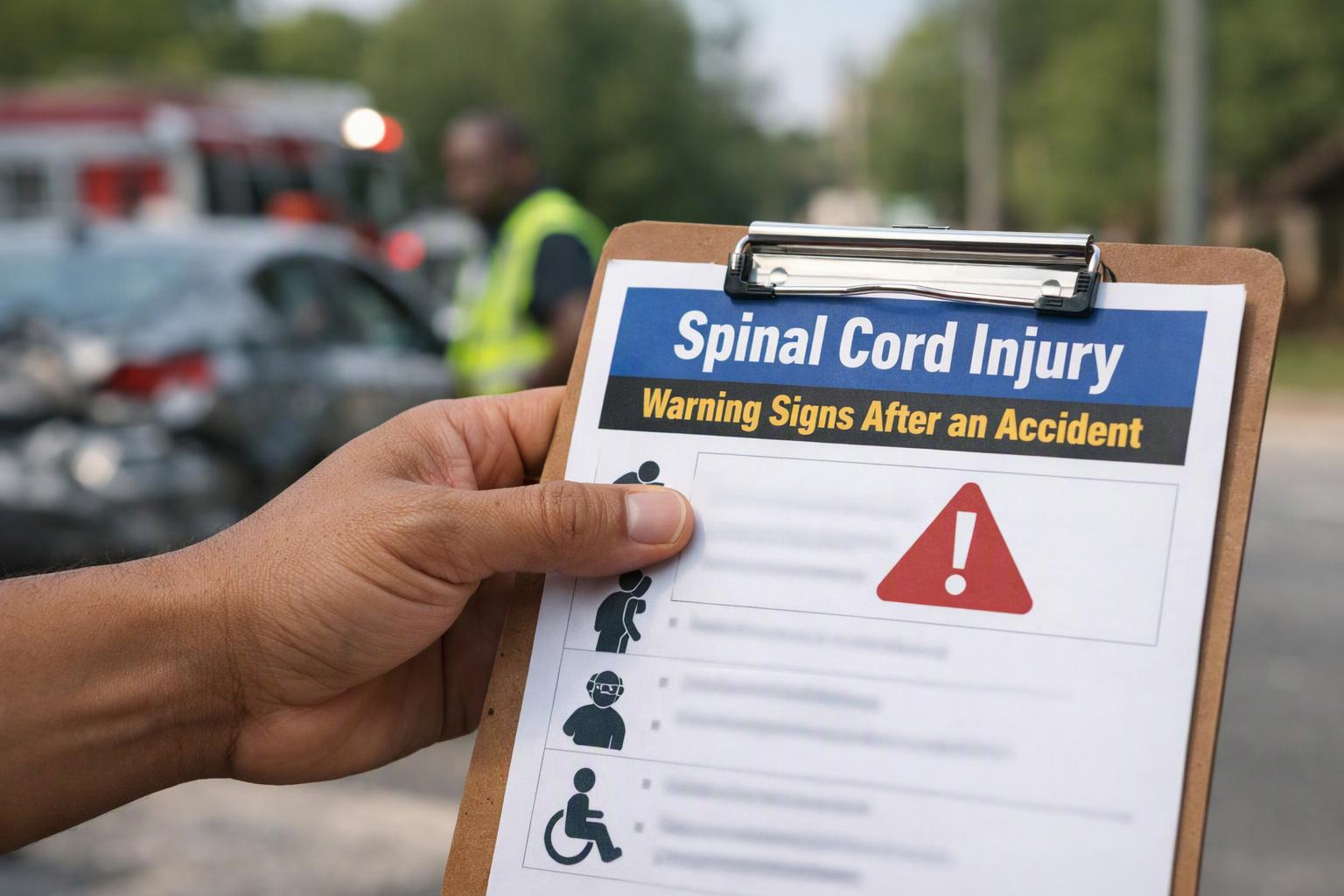
Which Spinal Cord Injury Symptoms Need Emergency Care?
Spinal cord injury symptoms such as new weakness, paralysis, numbness, tingling, severe neck or back pain, breathing difficulty, or loss of bladder or bowel control require emergency medical evaluation.
These signs can indicate possible damage to the spinal cord, nerves, vertebrae, or discs. Symptoms may affect the cervical, thoracic, or lumbar spine, and serious injury can occur even when the skin looks normal.
Call emergency services and explain the accident and symptoms clearly. Do not wait to see whether neurological symptoms improve, because early medical assessment can guide treatment and create important medical records.
We also help preserve the facts needed for a claim after urgent medical needs are addressed. Our Spinal Cord Injury Claims team reviews how the accident happened, what doctors found, and how the injury affects daily life.
What to Do When Someone May Have a Back or Neck Injury
A person who may have a back or neck injury should receive emergency help without being moved unnecessarily, because movement can worsen spinal damage.
Accident-scene decisions can affect both safety and later injury documentation. We use those records to compare the reported symptoms with the medical diagnosis and the available accident evidence.
Common Mistakes After Possible Spinal Cord Damage
Common mistakes after possible spinal cord damage can delay medical evaluation or weaken injury documentation. Each mistake can also make it harder to connect the accident to the medical condition and the losses that follow.
The safest response is to follow emergency medical guidance first and preserve reliable records afterward. We investigate the accident response, treatment history, and claim evidence together.
Mistake: Assuming No Immediate Pain Means No Serious Injury
No immediate pain does not rule out a spinal cord injury. Adrenaline can mask symptoms, and delayed symptoms can appear after the accident as swelling or nerve problems develop.
The cost of waiting can include worsening injury and gaps in claim evidence. A medical examination creates a record of what was reported, observed, and tested.
Our fix is to compare the timing of symptoms with emergency records, follow-up visits, diagnostic imaging, and physician findings.
Mistake: Ignoring Numbness or Tingling After the Crash
Numbness or tingling after a crash can indicate nerve compression, nerve damage, or a problem involving the spinal cord. These neurological symptoms should not be treated as ordinary soreness.
The cost of ignoring loss of sensation is delayed care and a less complete medical history. The fix is prompt emergency evaluation and clear reporting of where the sensation changed.
We use those reports to examine whether the accident forces could have caused the symptoms and what treatment followed.
Mistake: Moving Someone With a Possible Neck or Back Injury
Moving someone with a possible neck injury or back injury can increase spinal movement before emergency responders assess the person. People may move an injured person because they fear fire, traffic, or another danger at the accident scene.
The cost can include additional spinal trauma and unclear information about when symptoms changed. The fix is to call emergency services and move the person only when immediate danger leaves no safe alternative.
We review responder records, scene photographs, witness accounts, and medical findings when movement becomes part of the claim investigation.
Mistake: Treating Weakness or Loss of Movement as a Minor Strain
Muscle weakness or loss of movement can be a sign of paralysis or spinal cord trauma, not just a strained muscle. A neurological examination can help distinguish these conditions.
The cost of minimizing weakness is delayed treatment and incomplete documentation of functional limits. The fix is urgent medical evaluation and careful compliance with medical instructions.
We examine examination findings, treatment notes, and how the loss of movement affects work and daily activities.
Mistake: Waiting to Report Bladder or Bowel Changes
Loss of bladder control or loss of bowel control after an accident can signal a neurological emergency. These changes can also occur with cauda equina symptoms and require immediate medical attention.
The cost of waiting is a risk of delayed care and missing medical records about an important symptom. The fix is to report bladder control and bowel control changes promptly to emergency staff.
We preserve the timing of these reports and compare them with the medical diagnosis and treatment plan.
Mistake: Returning to Normal Activities Before Medical Clearance
Returning to physical activity before medical clearance can aggravate a spinal injury. People may resume normal tasks because symptoms seem manageable or because work and family duties continue.
The cost can include worsening symptoms, missed treatment guidance, and disputes about whether later limitations came from the accident. The fix is to follow medical restrictions and the recovery plan.
We document the activities that became difficult and connect those limits to treatment instructions and medical records.
Mistake: Failing to Preserve Accident and Medical Evidence
Failing to preserve the crash report, medical records, diagnostic imaging, photographs, and witness information can leave important questions unanswered. Evidence can show the force of the accident, the condition of the scene, and the timing of symptoms.
The cost is a weaker insurance claim and more difficulty proving causation, liability, and damages. The fix is to keep copies of records and provide them to our team for organized review.
We assess accident evidence, medical documentation, and insurance correspondence as part of the claim investigation.
Mistake: Giving an Insurer a Detailed Statement Before Understanding the Injury
Giving an insurance adjuster a recorded statement before understanding the medical diagnosis can create confusion about a spinal cord injury claim. Early symptoms may change as doctors complete examinations and imaging.
The cost can include incomplete descriptions, inaccurate assumptions, or statements that an insurer uses to dispute the claim. The fix is to gather medical information and understand the claim investigation before providing detailed answers.
We review communications with the insurer and help organize the facts around the accident, diagnosis, treatment, and losses.
Spinal Cord Injury Symptoms Compared With Other Accident Injuries
Spinal cord injury symptoms can overlap with other accident injuries, so a medical assessment is necessary. The pattern, severity, timing, and effect on movement or sensation help doctors decide what testing is needed.
| Possible injury | Common symptom pattern | Emergency warning signs | Medical assessment |
|---|---|---|---|
| Spinal cord injury | Weakness, loss of sensation, tingling, loss of movement, or changes in bladder or bowel control | Paralysis, breathing difficulty, severe neck or back pain, or rapidly changing neurological symptoms | Neurological examination and diagnostic imaging as ordered by the medical team |
| Nerve injury | Localized numbness, tingling, burning, or weakness along a nerve path | Progressive weakness or spreading loss of sensation | Physical examination, neurological testing, and imaging when appropriate |
| Muscle strain or soft tissue injury | Localized soreness, stiffness, and pain with movement | New weakness, numbness, tingling, or loss of movement requires renewed evaluation | Medical examination based on symptoms, function, and accident history |
| Traumatic brain injury | Headache, confusion, memory changes, dizziness, or altered awareness | Worsening confusion, loss of consciousness, seizure, or severe headache | Neurological assessment and testing directed by the medical team |
These patterns are not a diagnosis. We use the medical assessment, diagnostic imaging, and treatment records to avoid confusing a spinal injury with another accident injury.
How We Investigate a Spinal Cord Injury Claim
Atlanta Auto Law investigates a spinal cord injury claim by connecting accident facts, medical documentation, causation, liability, damages, and available insurance coverage.
Our team starts with the crash report, photographs, witness accounts, vehicle or site evidence, and other records that show how the accident occurred. We may examine accident reconstruction evidence when the sequence of events or force of impact is disputed.
We then organize medical records, diagnostic imaging, physician opinions, treatment history, and work information. This process helps us evaluate whether the accident caused the spinal cord damage and how the injury affects daily life.
We also review communications with the insurance adjuster and the coverage available for the car accident claim, truck accident claim, or construction accident claim. Our goal is to present a clear claim supported by reliable evidence.
When to Contact Atlanta Auto Law About an Accident Injury
Contact Atlanta Auto Law when an accident causes neurological symptoms, a serious diagnosis, disputed fault, pressure from an insurer, or lasting limitations that require claim investigation.
Our team can review the situation after urgent medical care is arranged. Bring the information that shows what happened, what doctors found, and how the injury has changed your life.
We can also review a claim when symptoms are delayed or medical records show a serious spinal injury that was not clear at the accident scene.
What Information Helps Us Review Your Injury Claim?
Medical records, imaging reports, the accident report, insurance correspondence, employment records, witness accounts, and photographs help us review an injury claim.
Medical records show reported symptoms, examinations, diagnoses, treatment, and restrictions. Imaging reports help explain findings involving the spinal cord, cervical spine, thoracic spine, lumbar spine, vertebrae, nerves, or discs.
The accident report, photographs, and witness accounts help establish what happened and when symptoms began. Insurance correspondence shows what the insurer requested, accepted, questioned, or denied.
Employment records can help document missed work, changed duties, and other effects on earning ability. We organize these materials to evaluate causation, liability, damages, and the strength of the insurance claim.
Author: Ronnie Mabra
Questions About Spinal Cord Injury Symptoms
Can spinal cord injury symptoms appear later after an accident?
Yes, spinal cord injury symptoms can appear later after an accident. Adrenaline, swelling, or changes in nerve function can affect when symptoms become noticeable. Seek emergency evaluation for new numbness, tingling, weakness, loss of movement, neck pain, back pain, or bladder or bowel changes. Atlanta Auto Law reviews delayed symptoms with medical records and accident evidence when investigating a claim.
Can a spinal cord injury exist without visible damage?
Yes, a spinal cord injury can exist without visible damage to the skin or an obvious external wound. Neurological symptoms may still reflect problems involving the spinal cord or nerves. Emergency medical care and appropriate testing are needed to assess the injury.
Can an accident cause a spinal cord injury without breaking the spine?
Yes, an accident can cause spinal cord damage without a broken vertebra. Force, movement, swelling, disc problems, or nerve involvement can affect spinal function. Medical professionals must evaluate the symptoms and determine the cause.
What medical records help support a spinal cord injury claim?
Medical records that help support a spinal cord injury claim include emergency records, neurological examinations, diagnostic imaging, physician notes, treatment records, restrictions, and follow-up evaluations. Records should show the symptoms, diagnosis, treatment, and effect on daily activities. We organize these records with accident reports, photographs, witness accounts, employment records, and insurance correspondence.