Evidence That Can Support a Personal Injury Claim
Evidence in a personal injury case can include accident-scene photographs, medical records, witness statements, official reports, video, vehicle data, and proof of financial losses. Atlanta Auto Law reviews how each item connects the accident, liability, injuries, and damages.
Written by Ronnie Mabra
Request an Estimate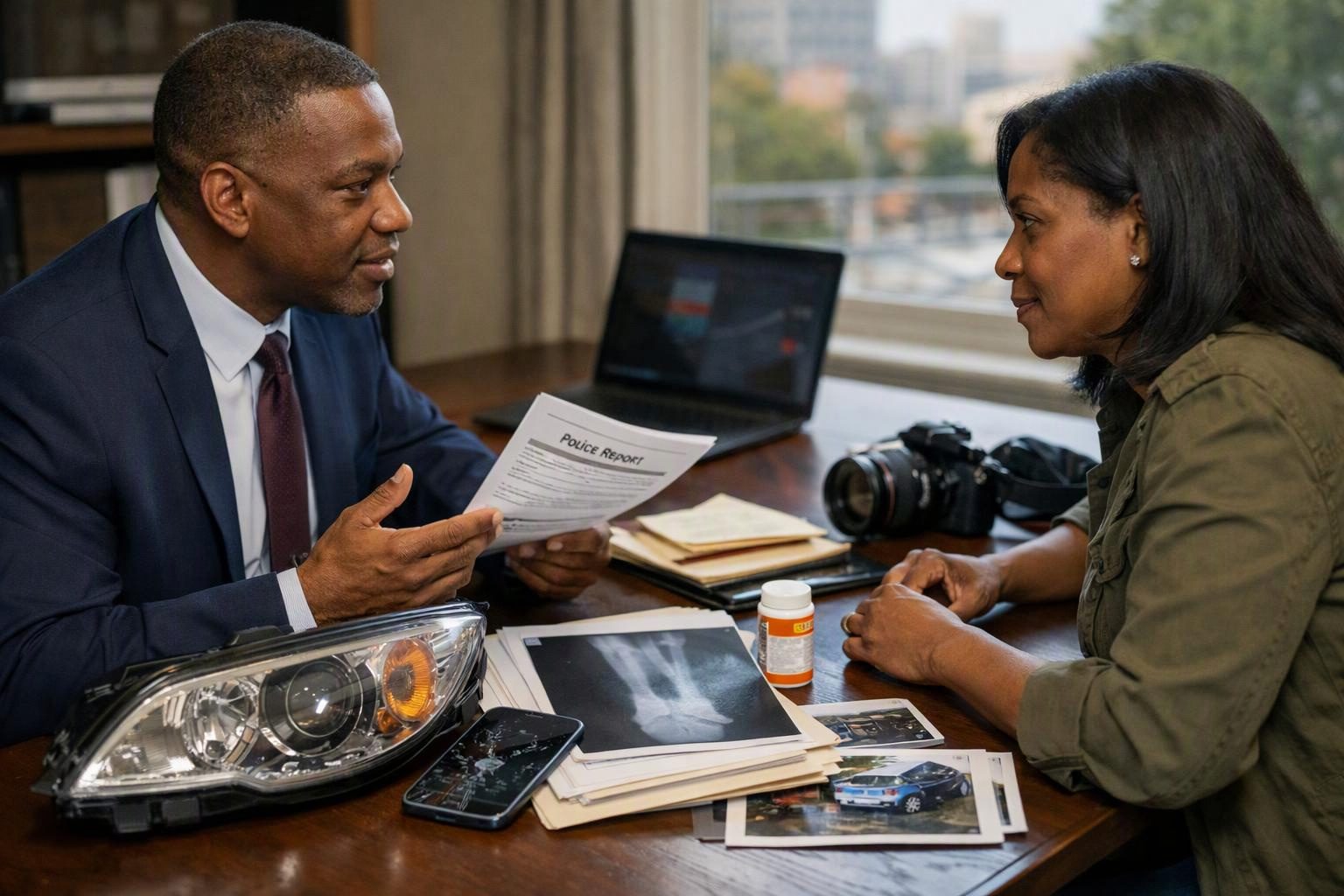
Personal injury claim evidence supports proof of accident liability, causation, injuries, and damages. Evidence is important when it helps show what happened, who was responsible, how the event caused an injury, and what losses followed.
A car accident and a truck accident may involve different records, vehicle data, and insurance issues. We organize those details so the facts support the related personal injury attorney work.
Author: Ronnie Mabra
What Evidence Is Important in a Personal Injury Case?
Evidence is important when it helps show what happened, who was responsible, how the event caused an injury, and what losses followed.
Liability evidence addresses negligence and responsibility for the event. Causation evidence connects the event to the injury, while damages evidence documents medical treatment, lost income, property damage, and pain and suffering.
We compare accounts against physical records, photographs, official reports, and medical documentation. This process helps us identify gaps, disputed facts, and evidence that may support an insurance claim or settlement demand.
Which Evidence Can Support a Personal Injury Claim?
Personal injury claim evidence can answer separate questions about liability, causation, and damages. The most useful records are those that are authentic, connected to the event, and preserved in their original form.
| Evidence category | Question it can help answer | Claim issue supported |
|---|---|---|
| Accident-scene photographs | What did the scene, vehicles, traffic controls, and road conditions look like? | Liability and collision dynamics |
| Medical records | What injury was diagnosed, and what treatment was provided? | Causation, treatment history, and damages |
| Police report | What facts and accounts were recorded after the event? | Initial liability investigation |
| Witness statements | What did people who observed the event see or hear? | Liability and witness testimony |
| Surveillance footage | Does recorded video confirm the timing or movement of vehicles and people? | Liability and causation |
| Vehicle damage | What can the damage show about the direction and force of impact? | Collision dynamics and property damage |
| Employment records | How did the injury affect work and income? | Lost income and financial damages |
| Insurance records | What coverage, statements, and claim communications exist? | Insurance claim handling and damages |
Each item has limits when viewed alone. We assess the full record so one photograph, medical record, or witness statement is not taken out of context.
What Should You Collect After an Accident?
You should collect available accident information, preserve photographs and communications, identify witnesses, and document medical care without putting yourself in danger.
After a car accident or truck accident, focus on preserving information that may disappear or become harder to verify. Our team can later review these materials as part of an accident investigation.
How Do Medical Records and Treatment Notes Support a Claim?
Medical records support a claim by documenting the injury, the treatment provided, the connection to the accident, and the effect on recovery.
Emergency treatment records can show the first reported symptoms and observations after the event. Diagnostic testing and treatment notes can explain the injury diagnosis, the care provided, and whether symptoms continued.
Medical bills document financial damages, while the treatment history helps explain the care involved. A pre-existing condition does not answer the causation question by itself, so we review prior records and post-accident findings together.
We organize medical evidence with employment records and personal accounts of daily limitations. That structure helps separate accident-related losses from unrelated medical history.
Can Surveillance Footage or GPS Data Help Prove a Claim?
Yes, surveillance footage and GPS data can help prove a claim when the information is authentic, relevant, and preserved before it is overwritten or altered.
Surveillance footage may come from nearby businesses, homes, traffic cameras, dashcams, or vehicle systems. The recording may show traffic movement, lane position, signals, impact, or events immediately before and after a crash.
GPS data, electronic logging data, and vehicle telematics may help show location, speed-related information, route history, braking, or driving activity. The meaning depends on the system, the available records, and the time connected to the event.
We send preservation requests when appropriate and track how digital evidence was obtained. Maintaining a clear chain of custody helps address claims that a video file or data record was altered.
How Do Accident Reconstruction Experts Help a Personal Injury Case?
Accident reconstruction experts can analyze physical evidence, vehicle data, roadway conditions, and witness accounts to explain how a collision occurred.
Accident reconstruction may examine vehicle damage, photographs, measurements, road conditions, event data recorder information, and collision dynamics. The analysis can address vehicle movement, impact sequence, visibility, and disputed accounts.
We use expert opinion when the physical evidence or technical issues require specialized analysis. The expert’s conclusions must remain tied to reliable evidence and the question the case needs to answer.
Reconstruction can support a car accident claim or truck accident claim when fault is disputed. It can also help evaluate comparative fault arguments and connect the collision mechanics to the claimed injuries.
How We Organize Evidence for a Personal Injury Claim
Atlanta Auto Law organizes evidence by linking the accident facts to liability, medical causation, and the losses claimed.
We begin with an evidence review that separates direct observations from opinions and later statements. Our team then compares the police report, photographs, witness evidence, video evidence, medical records, and insurance communications.
The liability analysis focuses on negligence, disputed conduct, road conditions, and comparative fault. Medical documentation focuses on injury diagnosis, treatment history, and the connection between the event and the condition.
Damages documentation includes medical bills, lost income, property damage, and the effect of the injury on daily life. We use the organized record to prepare an insurance claim or demand package that connects each loss to supporting documentation.
What Can We Do When Important Evidence Is Missing?
Atlanta Auto Law can identify alternative sources, request available records, and address preservation concerns when important evidence is missing.
Missing evidence does not always end an investigation. We examine related records and seek information that may confirm the same fact through another source.
Our approach depends on what is missing, who controlled it, and whether another record can answer the same question. We document the search so the claim record explains both the available evidence and the preservation steps taken.
Questions About Personal Injury Claim Evidence
Can text messages be used as evidence in a personal injury case?
Yes, text messages can be used as evidence when they are authentic, relevant, and connected to an issue in the case. Atlanta Auto Law reviews messages about the accident, symptoms, treatment, work limits, and insurance communications while preserving their surrounding context.
Can social media posts affect a personal injury claim?
Yes, social media posts can affect a personal injury claim when they appear to conflict with claimed injuries, limitations, or losses. We review the full context because a photograph or post may not show the person’s symptoms, treatment, or condition at other times.
How can I preserve evidence after a car accident?
You can preserve evidence after a car accident by keeping original photographs, saving messages and claim communications, recording witness information, and maintaining medical and employment records. Do not put yourself in danger to collect information, and contact us when important video or electronic evidence may be at risk of being overwritten.
What happens if the other driver disputes how the accident happened?
A disputed account requires a comparison of witness statements, photographs, the police report, vehicle damage, video evidence, and available vehicle data. We assess those sources for consistency and may use accident reconstruction when collision dynamics cannot be explained by the written accounts alone.
Can evidence of lost wages support a personal injury claim?
Yes, evidence of lost wages can support the damages portion of a personal injury claim when employment and income records connect the loss to the injury. We review employer records, work restrictions, missed work, and related documentation with the medical evidence.
Atlanta Auto Law reviews claim evidence, investigates disputed crashes, and organizes documentation for liability, causation, and damages. Contact us through our contact page to discuss the records and information related to your injury.
Get a Free EstimateRelated Resources
When a Workplace Injury May Involve a Third-Party Claim
What to AvoidCommon Mistakes That Can Hurt a Personal Injury Claim
What to AvoidTruck Accident Claim Mistakes That Can Make Evidence Harder to Preserve
What to AvoidDelayed Brain Injury Symptoms After an Accident: Signs Not to Ignore