Truck Accident Claim Mistakes That Can Make Evidence Harder to Preserve
Truck accident claim mistakes can weaken or destroy evidence when people delay medical care, speculate about fault, discuss the crash publicly, or fail to preserve records and communications. Atlanta Auto Law helps identify critical evidence, document what happened, and protect the claim from avoidable evidence problems.
Written by Ronnie Mabra
Request an Estimate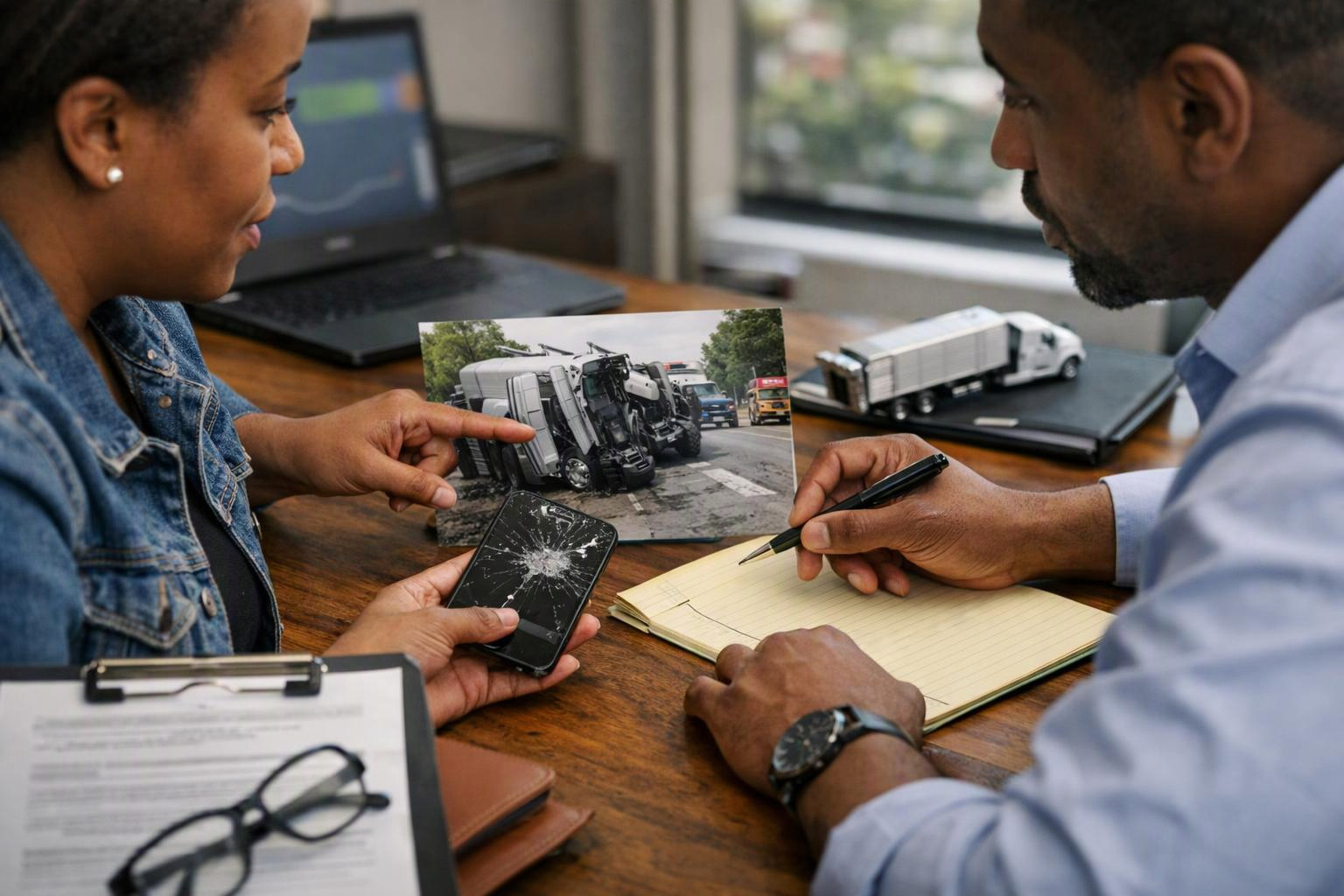
Why Evidence Preservation Matters in a Truck Accident Claim
Truck accident evidence matters because vehicle data, driver records, company records, medical documentation, and witness accounts can help establish what happened and who may be responsible.
A commercial vehicle accident may involve the truck driver, the trucking company, maintenance personnel, and other parties. Records such as driver logs, electronic logging data, black box data, and maintenance records may help explain the driver’s conduct and the company’s role in the crash.
Our team investigates the claim while details are still available. We also explain how the broader Truck Accident Claims process may affect evidence, liability, and settlement decisions.
The Mistakes That Make Truck Accident Evidence Harder to Preserve
Each mistake can create a different evidence problem. The table below connects the mistake with a preservation action and the possible claim consequence.
| Claim mistake | Evidence at risk | Preservation action | Possible claim consequence |
|---|---|---|---|
| Delaying a report or medical care | Crash and injury records | Report the crash and document symptoms promptly | Questions about causation or injury severity |
| Guessing about speed or fault | Accurate statements and testimony | State only what you personally observed | Inconsistencies that complicate reconstruction |
| Giving a recorded statement without guidance | The factual account of the crash | Review the request before responding | An insurer may interpret uncertainty against the claim |
| Posting crash details online | Photographs and online statements | Avoid discussing the claim publicly | Posts may be used as claim evidence |
| Repairing or discarding the vehicle too soon | Physical vehicle damage | Coordinate inspection before major repairs | Important damage patterns may be unavailable |
| Failing to save photos or witness details | Scene evidence and witness testimony | Save original files and contact information | Independent support for the account may be lost |
| Deleting messages or emails | Electronic evidence | Keep relevant records in their original form | The timeline may be harder to prove |
| Signing a release too soon | Legal rights tied to future losses | Review the release before signing | Future medical or financial claims may be limited |
Waiting Too Long to Report the Crash or Seek Medical Care
Delaying a crash report or medical treatment can make injury documentation and causation harder to establish. Symptoms can change over time, and medical records are often important evidence of the connection between the truck crash and the injury.
The delay may happen because pain is not obvious at first or because the person is focused on immediate safety. Our team gathers the crash report, medical records, treatment history, and symptom information to build a clear timeline.
Guessing About Speed, Fault, or What the Truck Driver Did
Guessing about speed, fault, or driver conduct can create statements that conflict with physical evidence or later testimony. A person who did not measure speed should not present an estimate as a fact.
People often try to explain what they think happened before all records are available. We separate personal observations from assumptions and compare the account with crash reconstruction evidence, vehicle damage, and available data.
Giving a Recorded Statement Without Understanding the Claim
A recorded statement can affect how an insurance adjuster and insurer interpret the claim. The safest factual account is accurate, limited to personal knowledge, and clear about what the person does not know.
An adjuster may ask questions before the injury picture or commercial vehicle records are complete. We help organize the factual account and address insurance communication before it creates avoidable confusion.
Posting Photos, Opinions, or Crash Details on Social Media
Social media posts can become claim evidence even when privacy settings limit the intended audience. A photograph, opinion, or short comment may be separated from the context that explains it.
People may post because friends and family want updates or because they want to share the accident scene. We advise clients to preserve relevant material, avoid public discussion, and direct claim questions through the proper channel.
Repairing, Selling, or Discarding the Damaged Vehicle Too Soon
Repairing, selling, or discarding a damaged vehicle can remove physical evidence needed for inspection. Vehicle damage may help show the direction and force of impact and may support or challenge an account of the crash.
Repairs may be necessary for safety or transportation. We coordinate the vehicle inspection, preserve repair records, and document the vehicle condition before important evidence changes.
Failing to Preserve Photos, Video, and Witness Information
Failing to save crash-scene photographs, dashcam footage, surveillance video, or witness information can remove independent evidence. Video systems may overwrite recordings, and witnesses may become difficult to locate.
The mistake often occurs when a person assumes that the police file contains everything. We collect original photographs, identify possible video sources, and organize witness contact information for later review.
Deleting Messages, Emails, or Other Claim-Related Records
Deleting text messages, emails, phone records, or other claim-related files can disrupt the timeline of notice, treatment, and communications. Electronic evidence may show what people knew and when they knew it.
People may delete files during routine phone cleanup or while trying to reduce stress after a crash. We identify relevant records and use a document-preservation process that keeps the available electronic evidence organized.
Signing a Release Before the Claim Is Fully Understood
Signing a settlement release can limit legal rights connected to future medical care and other losses. An insurance payment does not always reflect the full effect of an injury or the available liability evidence.
A release form may appear simple while covering broad claim rights. We review the proposed settlement release, compare it with the medical and liability record, and explain the effect before a client makes a claim-resolution decision.
What Evidence Should You Preserve After a Truck Crash?
You should preserve medical records, crash documentation, photographs, witness information, communications, vehicle evidence, and records that show how the injuries affected daily life and work.
Keep original files when possible, and avoid editing photographs or deleting messages. Our team can organize the records into a claim file that supports medical treatment, liability investigation, and the effect of the injuries.
What We Check When Evidence May Be at Risk
Evidence preservation requires identifying who controls each record and what may change or disappear over time. In a truck accident claim, the trucking company may control driver records, maintenance records, electronic data, inspection materials, and company communications.
Our team reviews the available claim documentation and identifies gaps that may affect liability. We evaluate whether a preservation request or spoliation notice is appropriate when records may be lost, deleted, overwritten, or altered.
We also compare electronic evidence with vehicle damage, witness accounts, medical records, and the crash report. This process helps us build a fact-based liability investigation without asking the injured person to guess about missing information.
When Should You Call Atlanta Auto Law About a Truck Accident Claim?
You should call Atlanta Auto Law when important evidence may be lost, an insurer requests a recorded statement, the trucking company controls key records, or the injuries and claim consequences are still developing.
Early guidance can reduce avoidable evidence problems. Our team can also help protect communications and coordinate the vehicle inspection while the claim is being investigated.
How Atlanta Auto Law Helps Protect a Truck Accident Claim
Atlanta Auto Law protects truck accident claims through organized claim investigation, evidence review, liability analysis, and focused insurance communication.
We begin by learning what happened and identifying the evidence that may explain the crash. We review the crash report, medical records, vehicle photographs, witness information, electronic evidence, and available trucking company records.
Our team then connects the evidence to the legal issues in the claim. We address disputed fault, driver conduct, company responsibility, injury documentation, and the effect of any proposed settlement release.
Preserving evidence early gives the claim a stronger factual foundation. If you need help protecting a truck crash claim, contact us through our contact page.
Ronnie Mabra, Atlanta Auto Law
Questions About Truck Accident Evidence Mistakes
Can a trucking company delete or lose evidence after a crash?
Yes, a trucking company can lose or delete records through routine data practices, equipment changes, poor retention, or intentional conduct. Atlanta Auto Law identifies records that may be at risk and evaluates whether a preservation request or spoliation notice is appropriate.
Should I talk to the truck driver's insurance company after an accident?
You should treat requests from the truck driver's insurance company carefully and provide only an accurate factual account. An insurance adjuster may use a recorded statement or other communication to interpret fault, injury symptoms, and the scope of the claim.
What happens if I already gave a recorded statement after a truck accident?
A recorded statement does not automatically end a truck accident claim. We review what was said, compare it with the available evidence, and address unclear or incomplete answers during the liability investigation.
Can social media posts affect a truck accident claim?
Yes, social media posts can affect a truck accident claim when photographs, opinions, or statements appear inconsistent with the injury or crash account. Preserve relevant posts and avoid discussing the claim publicly while the evidence is being reviewed.
How can I preserve black box evidence after a truck crash?
You can preserve black box evidence by promptly identifying the truck and requesting that the trucking company retain electronic data connected to the crash. Our team investigates the available vehicle data, electronic logging information, and related company records.