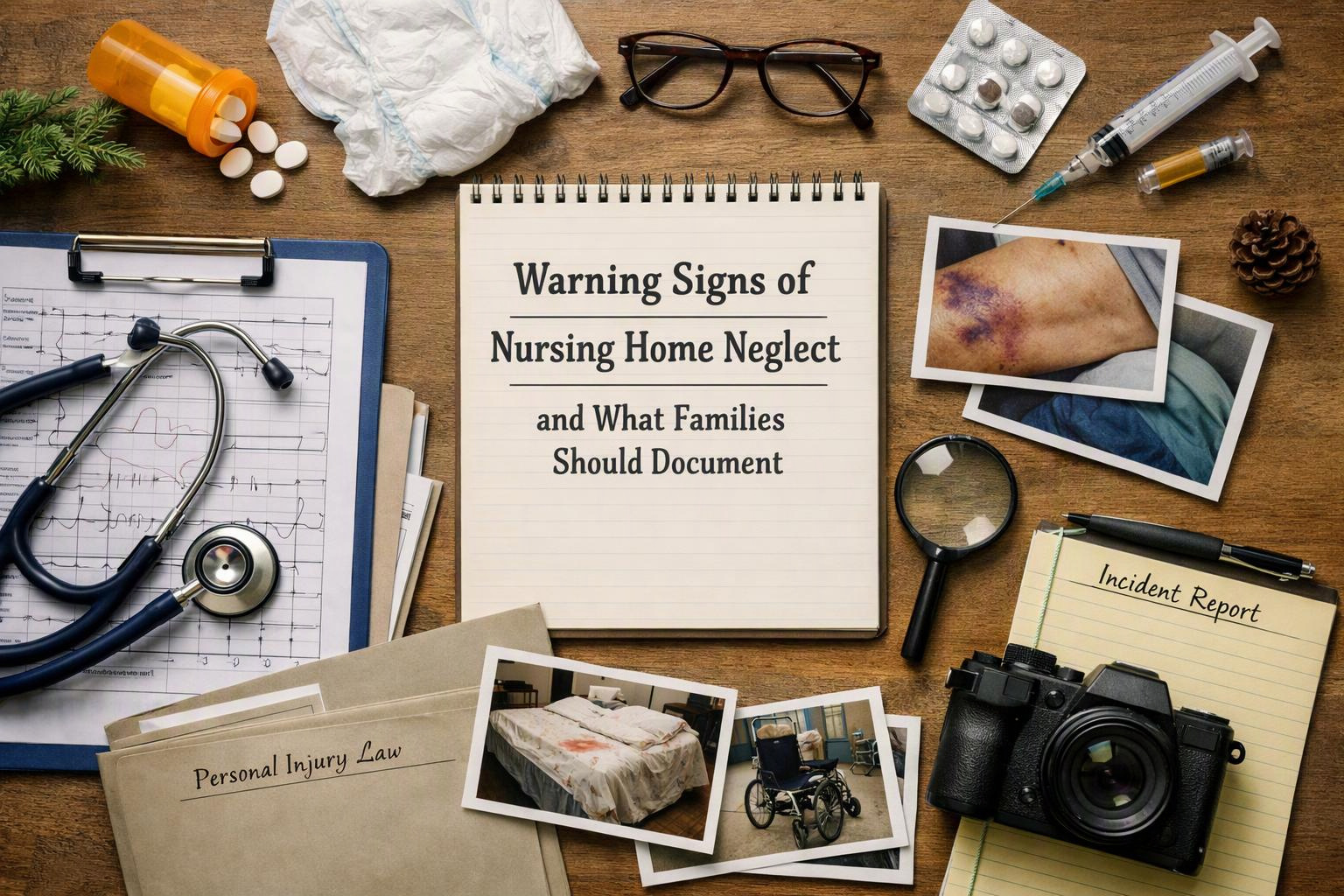
Warning Signs of Nursing Home Neglect and What Families Should Document
Nursing home neglect warning signs include unmet care needs, unexplained injuries, repeated falls, poor hygiene, medication concerns, and unsafe conditions. Families should record what they observe, preserve relevant communications and medical records, and contact Atlanta Auto Law when neglect may have caused harm.
Written by Ronnie Mabra
Request an EstimateAuthor: Ronnie Mabra
What Counts as a Warning Sign of Nursing Home Neglect?
Nursing home neglect is a failure to provide necessary care, supervision, or protection that can place a resident at risk of harm. Atlanta Auto Law reviews the resident’s needs, care plan, records, and changes in condition when a family reports possible neglect.
A single observation may have an innocent explanation, but repeated or unexplained problems deserve careful documentation and review. Unmet needs may involve personal care, nutrition, medication, fall prevention, medical attention, or safe supervision.
A duty of care requires the facility to follow the resident’s care plan and respond to known risks. We compare reported events with the care documentation and the harm that followed.
Which Signs Should Families Look For?
Warning signs can appear in a resident’s condition, surroundings, treatment, or records. Families should compare observations with the resident’s care plan and report concerns in writing.
Families do not need to decide the legal cause during the first observation. Clear details help our team assess whether a pattern of missed care may have contributed to harm.
| Warning sign | What families may observe | Records or details to preserve |
|---|---|---|
| Poor hygiene | Soiled clothing, unwashed hair, body odor, or signs that bathing and incontinence care were missed. | Dates of observations, care requests, staff responses, and photographs when lawful and appropriate. |
| Malnutrition | Unfinished meals, weight-related concerns, weakness, or food that does not match documented needs. | Meal observations, dietary instructions, care-plan entries, and medical follow-up. |
| Dehydration | Unusual confusion, weakness, dry mouth, or limited access to drinks. | Observed symptoms, requests for fluids, staff explanations, and medical evaluation. |
| Pressure injuries | New redness, sores, wounds, dressings, or pain during movement. | Location and appearance, treatment notes, photographs when suitable, and medical records. |
| Unexplained injuries | Bruises, cuts, swelling, fractures, or injuries without a clear account. | When the injury was found, explanations received, incident reports, and treatment records. |
| Falls | Repeated falls, new fear of movement, or changes that suggest an unmanaged fall risk. | Fall reports, witness accounts, care-plan precautions, and medical evaluation. |
| Medication errors | Missed medication, unexpected symptoms, incorrect instructions, or unexplained changes after a dose. | Medication names, observed symptoms, medication administration records, and provider notes. |
| Unsafe conditions | Blocked paths, missing safety equipment, poor lighting, or hazards near the resident. | Photographs, location details, complaint records, and staff responses. |
Mistakes That Can Weaken a Nursing Home Neglect Record
Evidence preservation helps show what the facility knew, what care it provided, and how the resident’s condition changed. A weak record can make a neglect claim harder to evaluate because important details, communications, or medical records may be unavailable.
We help families organize incident documentation, facility communications, witness accounts, and medical records so the reported care failure can be compared with the resident’s harm.
Mistake: Waiting to Record Changes in the Resident's Condition
Waiting to record a change in the resident’s condition can cause important symptoms and care observations to be forgotten. Families may focus on getting help and overlook contemporaneous notes that could show when the change began.
The cost of delay can include a less reliable timeline and difficulty connecting the condition to missed care. We help organize dated observations, symptoms, photographs, and treatment records into a clear account.
Mistake: Describing Conclusions Without Recording Observable Facts
Calling an event “neglect” without recording observable facts can make the incident description less useful. Opinions may differ, while details about appearance, location, statements, and actions give a witness account a stronger foundation.
The cost is confusion about what actually happened and who saw it. We separate factual observations from conclusions and use the incident description to guide further review.
Mistake: Treating Unexplained Injuries or Repeated Falls as Isolated Events
Unexplained injuries and repeated falls may show a broader fall risk or failure to supervise. Treating each event as isolated can hide similar conditions, prior warnings, or repeated gaps in care.
The cost may include missed evidence about notice and worsening harm. We compare fall reports, care-plan precautions, witness accounts, and medical evaluation records.
Mistake: Relying Only on Verbal Reports to Nursing Home Staff
Verbal reports can be forgotten, misunderstood, or difficult to verify later. A written complaint creates a clearer record of the concern, the facility communication, and the response from the care team.
The cost may include uncertainty about when the facility was told and how it responded. We review written complaints, grievances, messages, and responses when evaluating the evidence.
Mistake: Failing to Preserve Medical and Facility Records
Medical records and facility records can clarify the resident’s condition, treatment, and reported incidents. Families may lose useful evidence when they keep only summaries or altered copies.
The cost can include gaps in the care timeline and difficulty testing conflicting accounts. We seek relevant care notes, medication administration records, incident reports, and hospital records in their original form when available.
Mistake: Assuming Poor Hygiene Has No Legal Importance
Poor hygiene can show missed bathing, incontinence care, or other unmet needs. These conditions may affect infection risk, comfort, and the resident’s dignity.
The cost may involve worsening health and a weaker record of the care that was missed. We examine hygiene observations alongside care-plan duties, staff communications, and medical consequences.
Mistake: Confronting the Facility Before Securing Evidence
Confronting the facility before preserving evidence can allow photographs, messages, or personal notes to be lost or changed. Families may also become concerned about retaliation or a facility investigation that does not match their observations.
The cost can include lost evidence and a less complete record of the original condition. We help identify photographs, records requests, communications, and other materials that should be preserved before a dispute grows.
Mistake: Delaying Legal Review After Serious Harm
Delaying legal review after serious injury or wrongful death can make evidence preservation and claim evaluation more difficult. Records may become harder to locate, and witnesses may remember fewer details.
The cost may include lost opportunities to connect neglect with the harm. We review the available evidence and identify preservation needs involving medical records, facility records, and witness accounts.
What Should Families Document if They Suspect Neglect?
Families should document what happened, when and where it happened, who observed it, what the facility said or did, and how the resident’s condition changed. Families should preserve original messages, photographs, records, and other evidence without altering them.
An observation log can connect the resident’s condition to later medical treatment or a change in care. We use these details to assess whether the evidence supports a nursing home neglect claim.
Which Records May Help Show What Happened?
Records that may help show what happened include the resident’s medical chart, care plan, medication documentation, incident reports, facility communications, and records from later medical treatment. Each record may answer a different question about notice, care, injury, or causation.
Families should keep copies in their original form and record how each document was received. We compare facility records with witness evidence and hospital records when reviewing the reported harm.
| Record type | What it may clarify | How families can preserve it |
|---|---|---|
| Medical chart | Symptoms, diagnoses, treatment, and changes in condition. | Request complete copies and keep the received version unchanged. |
| Care plan | Known risks, required assistance, and planned preventive care. | Preserve current and earlier versions when available. |
| Progress notes | Daily observations, symptoms, and staff responses. | Keep the complete record with its dates and authors. |
| Medication administration record | Whether medications were documented as given, held, or missed. | Request the relevant entries and related provider notes. |
| Fall report | Location, circumstances, witnesses, injuries, and facility response. | Match the report with family notes and medical evaluation. |
| Staffing records | Who was assigned or present during the relevant care period. | Request them through the appropriate legal process when needed. |
| Complaint records | What the family reported and how the facility responded. | Save written complaints, replies, notices, and call notes. |
| Hospital records | The injury, treatment, transfer, and medical consequences after the concern. | Request records from the hospital and related providers. |
When Should Families Call Atlanta Auto Law?
Families should call Atlanta Auto Law when suspected neglect involves serious harm, unexplained injury, repeated falls, a major change in the resident’s condition, or facility records that conflict with what the family observed.
Our team reviews the available evidence and helps families understand whether the concern may involve a nursing home neglect claim or nursing home abuse claim.
How We Review a Nursing Home Neglect Concern
Atlanta Auto Law reviews the resident’s condition, available records, communications, witness accounts, and medical consequences to evaluate whether neglect may support a claim. Our team connects the documented care failure to the harm described in the evidence.
We examine medical records and facility records for consistent timelines, missing care, and conflicting accounts. We also assess causation and damages by reviewing how the reported neglect relates to the resident’s injury, treatment, losses, or death.
Our review may include the care plan, progress notes, medication administration record, incident reports, hospital records, photographs, and witness statements. The goal is to organize the evidence before deciding how a legal claim should proceed.
What Families Should Do After Documenting a Concern
Families should address the resident’s immediate safety and medical needs, preserve relevant evidence, report the concern through appropriate channels, and seek legal review when the suspected neglect may have caused harm. Families can review our Nursing Home Abuse Claims service to understand how we evaluate these matters.
Medical care should address urgent symptoms or injuries before families focus on the legal record. We can then review the preserved evidence and help identify the next steps for a possible personal injury claim.
Contact Atlanta Auto Law through our contact page when the resident’s safety, health, or legal rights may be affected.
Get a Free EstimateQuestions About Nursing Home Neglect Warning Signs
Can unexplained injuries or repeated falls be signs of nursing home neglect?
Yes, unexplained injuries and repeated falls can be signs of nursing home neglect when they relate to missed supervision, an unmanaged fall risk, or another failure to provide care. Atlanta Auto Law compares the injuries with incident reports, care-plan precautions, witness accounts, and medical evaluation.
Should families take photographs when they suspect nursing home neglect?
Yes, families should take photographs of visible conditions when doing so is lawful, safe, and consistent with the resident’s privacy. Photographs can preserve the appearance and location of an injury, unsafe condition, or hygiene concern, but they should remain unaltered and be paired with dated notes.
Can families request nursing home medical and incident records?
Yes, families may request relevant nursing home medical and incident records when they have the authority to obtain them. Records may include the medical chart, care plan, progress notes, medication administration record, fall reports, complaint records, and records from later hospital treatment.
What is the difference between nursing home neglect and nursing home abuse?
Nursing home neglect generally involves a failure to provide necessary care, supervision, or protection, while nursing home abuse generally involves intentional harmful conduct or mistreatment. The same resident may experience concerns that require review under both categories, so we examine the conduct, records, injuries, and surrounding evidence.