
What Is Third-Party Liability?
Third-Party Liability is legal responsibility assigned to someone outside the injured person’s direct employment or contract relationship. In a construction accident claim, the responsible party may include a property owner, general contractor, subcontractor, equipment maker, or maintenance company. The claim focuses on that party’s conduct and its connection to the injury.
Quick Facts About Third-Party Liability
Category
Construction injury liability
Used for
Claims against outside responsible parties
Common confusion
Confused with employer liability
Also called
Third-Party Negligence
Often discussed with
Construction Accident Claims
Key Takeaways About Third-Party Liability
- The responsible party stands outside the injured worker’s direct employer relationship.
- Evidence must connect the outside party’s conduct to the injury.
- Third-party liability is not the same as employer responsibility.
How Third-Party Liability Works
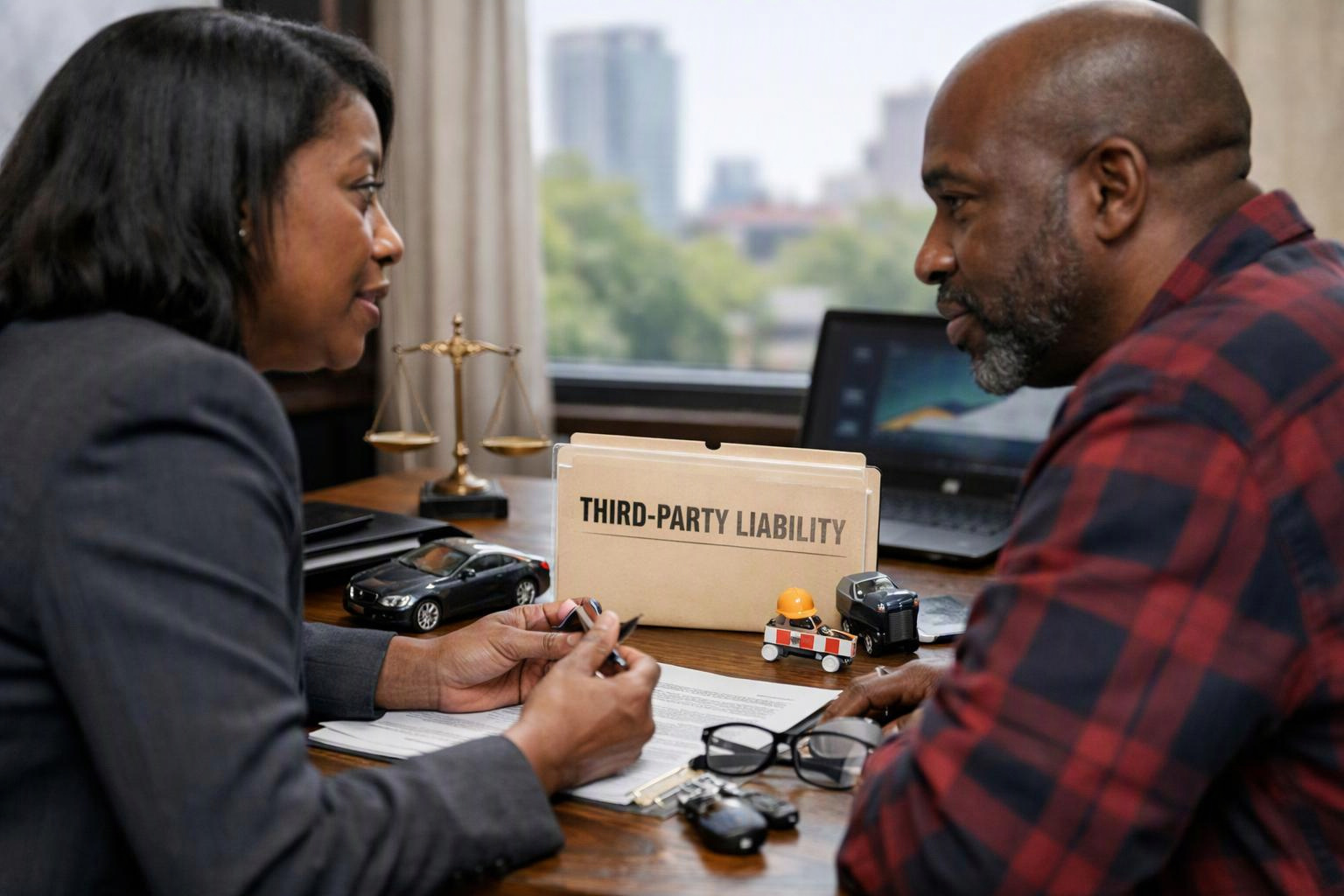
Third-Party Liability applies when an outside person or company may have caused or contributed to a construction injury. The review examines contracts, site roles, work records, photographs, witness accounts, and other available evidence. The goal is to connect a specific act or unsafe condition with the harm claimed.
Related glossary terms: Negligence, Premises Liability, Proximate Cause.
A construction project can involve several separate entities with different responsibilities. A property owner may control access, a general contractor may coordinate the work, and a subcontractor may perform a specialized task. An equipment manufacturer or maintenance company may also become relevant when a product or service contributes to an accident. Each potential defendant requires a separate analysis of conduct, control, and causation.
From the Atlanta Auto Law team
When we review a construction accident claim, we map each company’s role on the job and examine how the accident happened. We compare contracts, site evidence, witness accounts, and available records to identify outside parties whose conduct may support a liability claim.
Third-Party Liability in Practice: A Real-World Example
A construction worker suffers an injury after a temporary platform fails at a building site. The worker’s claim may examine whether a subcontractor installed the platform improperly, whether a contractor controlled the site, or whether a separate company supplied defective equipment.
Related Services
Related Terms
Negligence
Negligence is a failure to use reasonable care under the circumstances, causing harm to another person…
Premises Liability
Premises Liability is a legal concept that may hold a property owner or occupier responsible when…
Proximate Cause
Proximate Cause is a legal connection between conduct and harm that makes the harm a reasonably…
Vicarious Liability
Vicarious Liability is a legal doctrine that may hold one person or organization responsible for another…
Atlanta Auto Law
Have Questions About Third-Party Liability?
Contact Atlanta Auto Law for practical guidance on Third-Party Liability and related personal injury attorney work in Atlanta.