
What Is Proximate Cause?
Proximate cause is the legally sufficient connection between conduct and an injury. The connection exists when the injury was a reasonably foreseeable result of the conduct, without an unrelated event breaking the chain. Courts examine the surrounding facts to decide whether the conduct meaningfully contributed to the harm and supports legal responsibility.
Quick Facts About Proximate Cause
Category
Causation principle
Used for
Connecting conduct with injury
Common confusion
Confused with factual cause
Also called
Legal Cause, Proximate causation
Often discussed with
Dog Bite Lawyer
Key Takeaways About Proximate Cause
- Foreseeability separates proximate cause from simple factual cause.
- An unrelated event may break the legal chain.
- Proximate cause is not the same as negligence.
How Proximate Cause Works
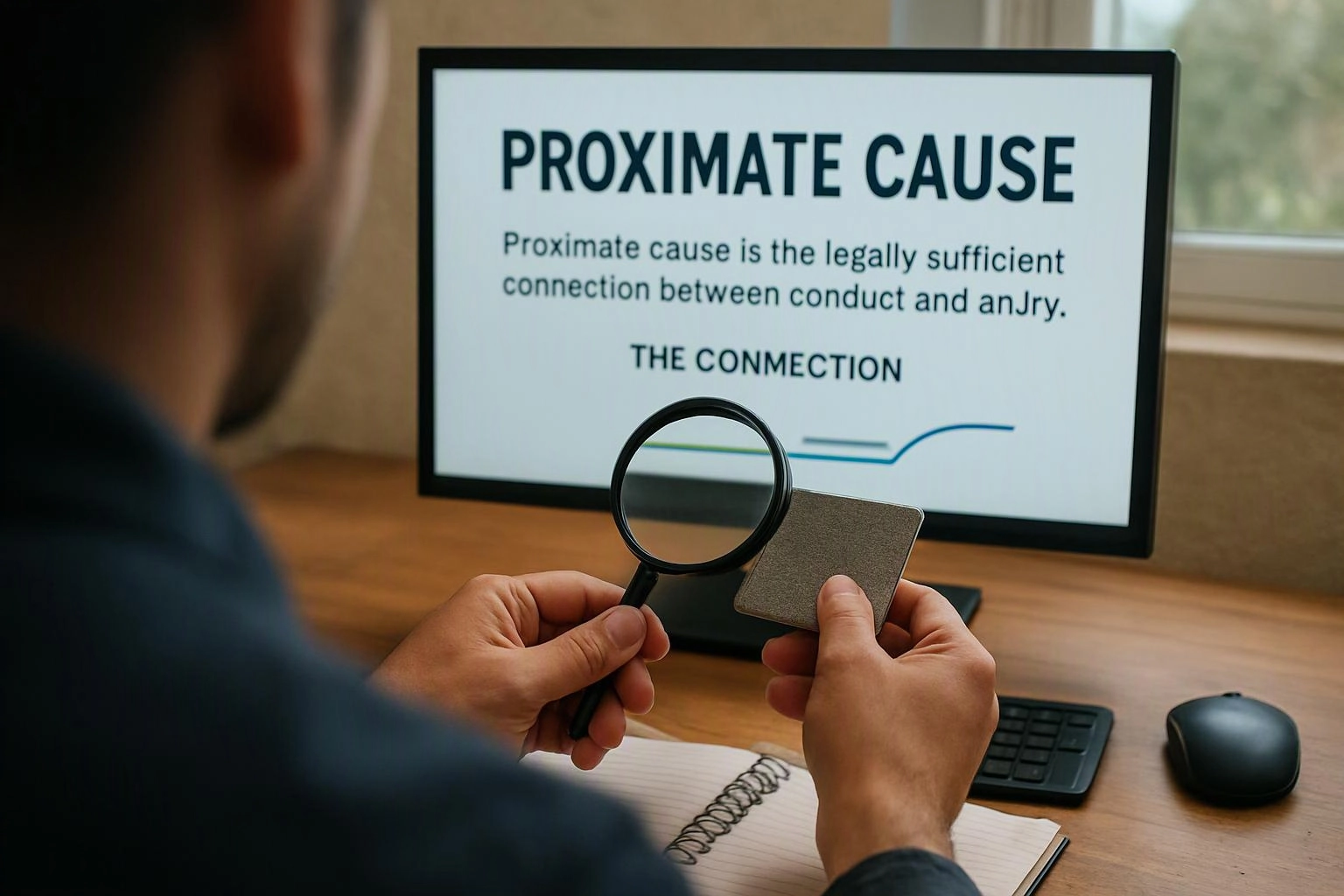
Proximate cause guides the legal analysis between an act and the injury that followed. The analysis asks whether the harm was a foreseeable result of the conduct. It also considers whether an independent event changed the outcome. A later event may affect responsibility when it was unusual or unrelated to the original conduct.
Related glossary terms: Causation, Negligence, Liability.
In a dog bite claim, the facts may include what the dog owner knew, what happened before the bite, and how the injury occurred. Foreseeability helps assess whether the injury fits the risk created by the conduct. Negligence addresses whether the person failed to act with reasonable care. Proximate cause addresses the connection between that conduct and the resulting injury.
From the Atlanta Auto Law team
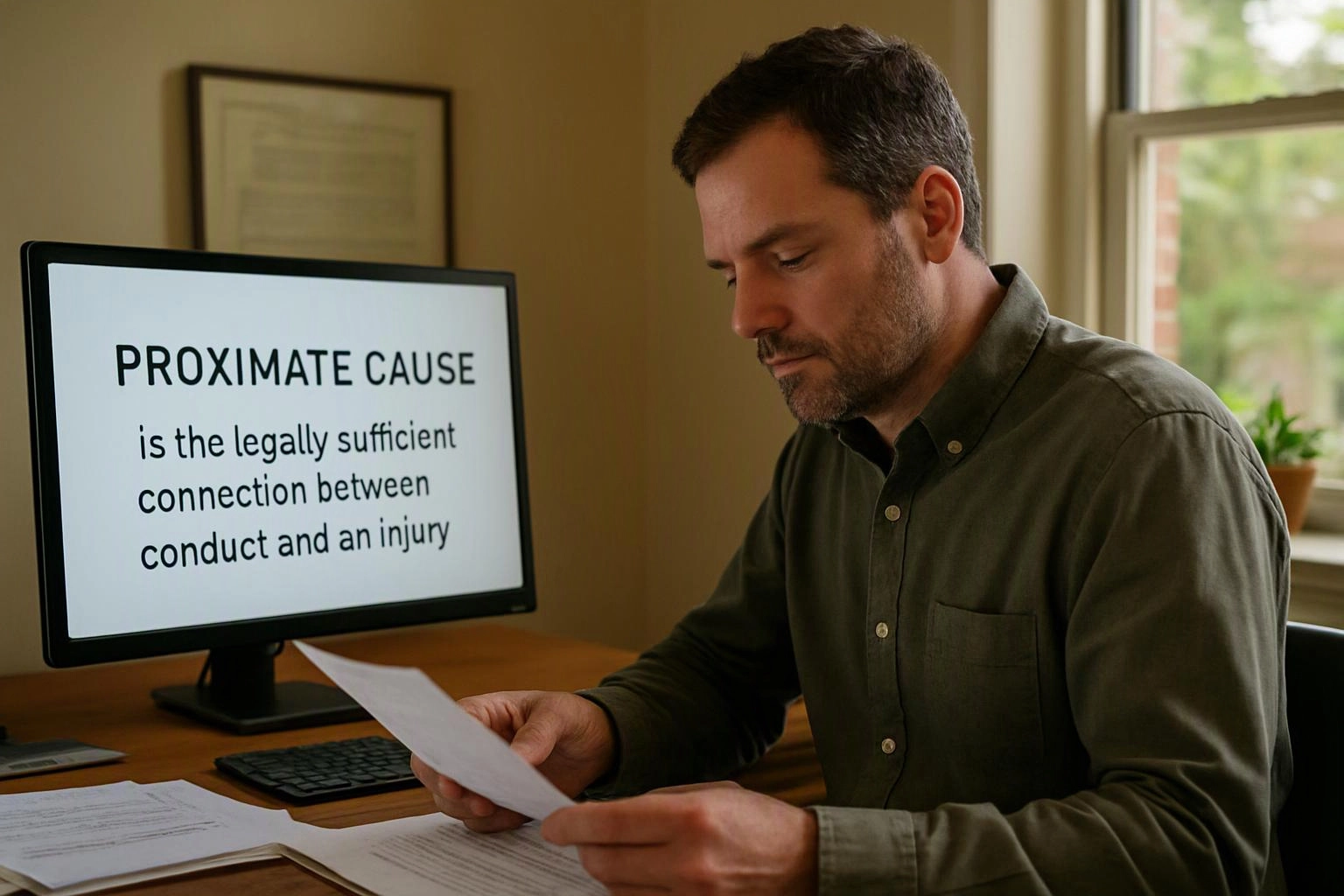
When we review a dog bite claim, we trace the events from the conduct that created the risk through the injury. We examine witness accounts, records, photographs, and other evidence to assess whether an outside event interrupted that chain. We also separate proximate cause from questions about fault and damages.
Proximate Cause in Practice: A Real-World Example
A dog owner leaves a known aggressive dog unsecured near a walkway, and the dog bites a passerby. The owner’s conduct may have proximate cause significance if the bite was a foreseeable result of leaving the dog unsecured.
Related Services
Related Terms
Causation
Causation is the connection between an act or event and the harm that follows. In a…
Negligence
Negligence is a failure to use the level of care that a reasonably careful person would…
Liability
Liability is legal responsibility for harm, loss, or damage caused by a person, business, product, or…
Bodily Injury
Bodily Injury is physical harm suffered by a person, including damage that follows a crash and…
Atlanta Auto Law
Have Questions About Proximate Cause?
Contact Atlanta Auto Law for practical guidance on Proximate Cause and related personal injury attorney work in Decatur.