What to Do After a Pedestrian or Bicycle Accident
Pedestrian or bicycle accident injuries require prompt medical care, careful evidence preservation, and informed communication with insurers. Atlanta Auto Law reviews the incident, identifies potential liability, and explains the claim process, with Free Estimates Available.
Get a Free EstimateWhat Should You Do Immediately After a Pedestrian or Bicycle Accident?
Immediate safety, medical attention, scene documentation, and information exchange are the first priorities after a pedestrian or bicycle accident. Move away from traffic if you can do so safely, and call emergency services when anyone may be hurt.
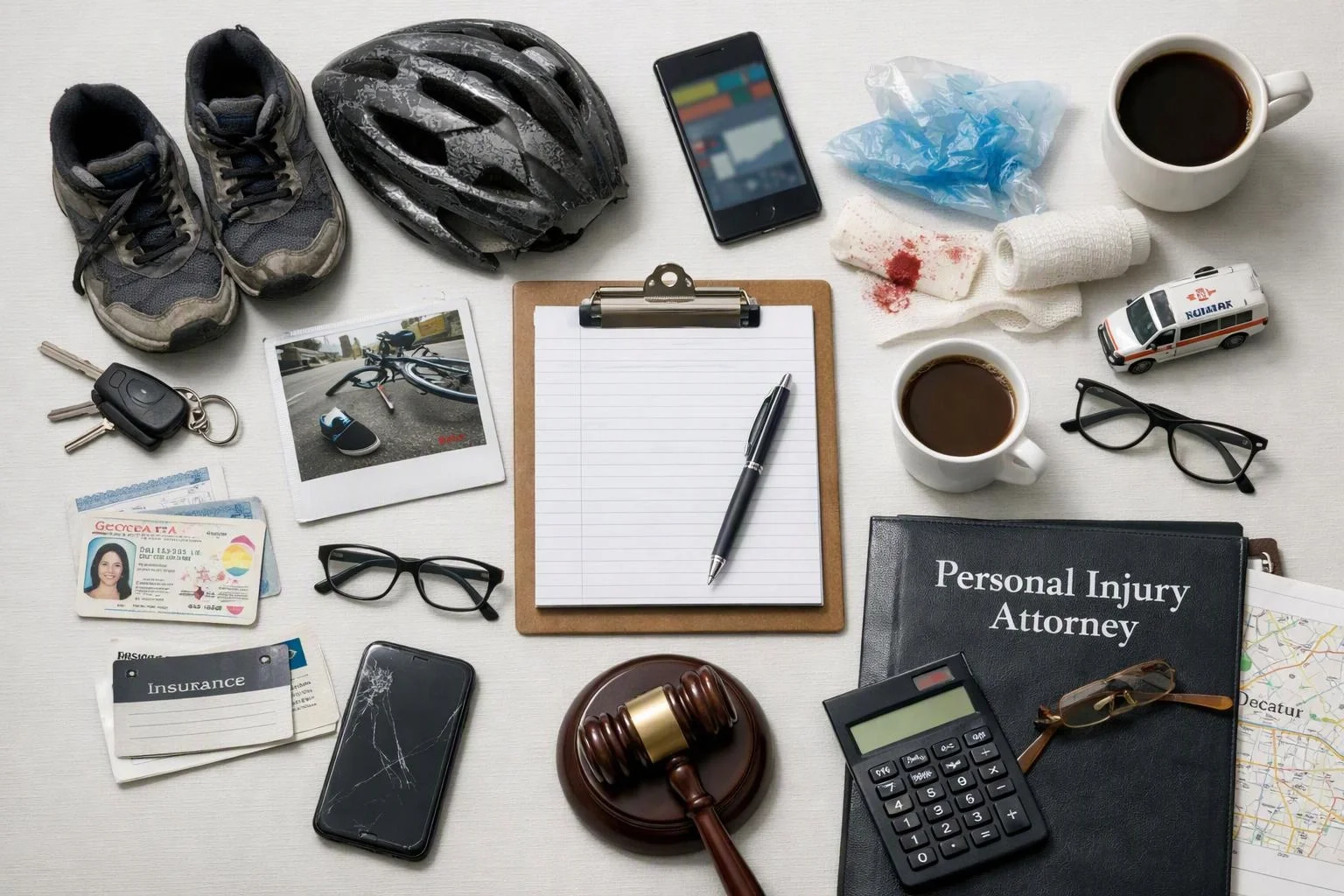
When Should You Seek Medical Care After the Accident?
You should seek medical care promptly after a pedestrian or bicycle accident because some injuries may not be apparent at the scene.
A traumatic injury can include a fracture, head injury, internal injury, or damage to soft tissue. Delayed symptoms can appear after the traffic collision, even when pain seems limited at first.
Go to an emergency department for urgent symptoms or when emergency personnel recommend it. Arrange follow-up care for continuing pain, reduced movement, dizziness, or other new symptoms. Medical documentation helps connect the injury to the accident and records the care you received.
What Evidence Can Support a Pedestrian or Bicycle Accident Claim?
Evidence can support a pedestrian or bicycle accident claim by showing what happened, who may be responsible, and how the injury affected you. Preserve evidence promptly because video, physical conditions, and memories can change.
Our team reviews this material as part of a claim investigation. We also look for evidence involving driver negligence, right of way, traffic signals, roadway hazards, and comparative fault.
How Should You Communicate With an Insurance Company?
You should provide accurate basic information to the insurer while protecting your ability to document injuries, losses, and liability before discussing settlement.
Notify the insurance company about the accident as required by the applicable policy. Give the date, location, people involved, and basic facts without guessing or changing your account.
An insurance adjuster may request a recorded statement or broad access to medical information. Ask what the request covers and consider legal guidance before providing a recorded statement when fault or injury is disputed.
Do not accept a settlement offer before you understand your medical bills, lost wages, property damage, pain and suffering, and future care needs. Our team organizes claim documentation and evaluates liability before settlement negotiation.
When May a Pedestrian Accident Lawyer Be Appropriate?
A pedestrian accident lawyer may be appropriate when injuries are serious, fault is disputed, insurance issues complicate the claim, or the accident involves a hit-and-run or wrongful death.
A pedestrian injury may result from motorist negligence at a crosswalk, intersection, traffic signal, or roadway. A pedestrian accident lawyer can examine the driver’s conduct, available witness evidence, the police report, and applicable insurance coverage.
Legal guidance can also help after a hit-and-run pedestrian accident. Uninsured motorist coverage may apply in some cases, depending on the available policy and the facts.
We evaluate the personal injury claim when liability is contested or when a serious injury affects treatment, work, daily activities, or family responsibilities. Wrongful death claims require careful review of the accident, the available evidence, and the losses suffered by surviving family members.
Pedestrian Accident Lawyer services may help preserve evidence and present a complete claim.
When Should You Consider a Bicycle Accident Lawyer?
You should consider a bicycle accident lawyer when a collision, roadway condition, insurance dispute, or injury makes fault and recovery difficult to evaluate.
A bicycle accident may involve a motor vehicle collision, a roadway hazard, a door collision, or a bike lane incident. Our team examines vehicle movement, visibility, traffic controls, bicycle equipment damage, and whether each person followed applicable safety rules.
A bicycle injury can include fractures, head injuries, road rash, or other trauma. We also review comparative fault arguments because an insurer may claim that the cyclist contributed to the accident.
Insurance coverage can involve the driver’s policy, household coverage, or uninsured motorist coverage. We identify the available policies and connect the documented injury and bicycle damage to the claim.
Bicycle Accident Lawyer services may be useful when the crash involves disputed liability, significant property damage, or continuing medical care.
How Does a Pedestrian or Bicycle Accident Claim Proceed?
A pedestrian or bicycle accident claim proceeds through consultation, investigation, medical documentation, insurance handling, and possible litigation.
What Should You Ask a Pedestrian or Bicycle Accident Lawyer?
Questions about the case, evidence, insurance, treatment, strategy, and communication can help you understand the legal consultation.
Bring the police report, insurance communications, medical records, bills, photographs, witness information, wage records, and bicycle or vehicle damage documents when available.
How Atlanta Auto Law Reviews Pedestrian and Bicycle Accident Claims
Atlanta Auto Law reviews pedestrian and bicycle accident claims through accident reconstruction, liability analysis, injury documentation, and insurance communications.
We begin with the facts that may change the claim evaluation, including the point of impact, traffic signal, crosswalk, bike lane, roadway hazard, vehicle movement, and available witness evidence. Our team preserves relevant records and examines whether motorist negligence or another factor caused the traffic collision.
We organize medical documentation and review how the pedestrian injury or bicycle injury affects treatment, work, daily activities, and property damage. We then use that information to support insurance communications and claim evaluation.
Our goal is to give you a clear view of the evidence, available insurance coverage, and next steps. Free Estimates Available applies to our initial case review, and we explain what information is useful for that discussion.
Contact Atlanta Auto Law for a legal consultation about your pedestrian or bicycle accident claim.
Contact Atlanta Auto Law to discuss the accident and available claim options.
Get a Free EstimateQuestions About Pedestrian and Bicycle Accident Claims
Should I talk to the other driver's insurance company after a pedestrian accident?
Atlanta Auto Law recommends providing accurate basic information while protecting your ability to document the pedestrian injury, losses, and liability. Avoid guessing about fault, giving a recorded statement without understanding its scope, or accepting a settlement offer before your medical care and claim documentation are evaluated.
What if the driver who hit me left the scene?
A hit-and-run pedestrian accident should be reported to law enforcement, and you should seek medical care and preserve available witness, video, and scene evidence. Uninsured motorist coverage may provide a possible source of recovery, depending on the applicable policy and facts.
Can a pedestrian or cyclist recover damages if fault is disputed?
A pedestrian or cyclist may recover damages when the evidence supports another party’s liability, even if comparative fault is disputed. The claim review should address traffic signals, right of way, visibility, roadway conditions, witness evidence, medical records, and the conduct of each person involved.
What should I do if my bicycle was damaged in the crash?
Bicycle damage should be photographed, preserved, and documented with repair information, ownership records, and details about damaged equipment. Do not discard the bicycle or replace parts before the damage is recorded and the insurance claim is evaluated.
Can surveillance video help prove a pedestrian or bicycle accident claim?
Surveillance video can help show vehicle movement, traffic signals, the crosswalk, the bike lane, and the events leading to the collision. Request potentially useful footage promptly because businesses and camera systems may not retain recordings indefinitely.
What documents should I bring to a pedestrian or bicycle accident lawyer?
Bring the police report, insurance information, insurer communications, medical records, medical bills, photographs, witness contact information, wage records, and vehicle or bicycle damage documents. These materials help the claim review address injury, property damage, liability, and available insurance coverage.
Related Resources
What Happens After Hiring a Personal Injury Attorney
Everything About ItWhat to Do After a Car Accident Before Calling a Lawyer
Everything About ItQuestions to Explore After a Rideshare, Bus, DUI, or Hit-and-Run Accident
Everything About ItQuestions to Ask About PFAS and Compounded Weight-Loss Injection Injury Claims