Truck Accident Evidence Mistakes That Can Weaken Your Injury Claim
Truck accident evidence mistakes can weaken an injury claim when critical records, witness details, medical documentation, or preservation steps are missed; Atlanta Auto Law identifies these risks and helps build the evidence needed for a truck injury case.
Get a Free EstimateWhy Truck Accident Evidence Matters to an Injury Claim
Truck accident evidence matters because it connects the crash to fault, injuries, and financial losses. Atlanta Auto Law reviews the available proof to help establish liability and document damages.
An injury claim may depend on the truck driver’s conduct, the commercial truck’s condition, the trucking company’s records, and the timing of medical treatment. Evidence can also show how the crash caused lost wages, medical bills, pain and suffering, and future medical needs.
The Evidence Mistakes That Can Weaken Your Claim
Evidence mistakes can affect both liability proof and damages documentation. The impact depends on what information was lost, how long it remained unavailable, and whether other evidence can support the claim.
Our team focuses on preservation, collection, and organization so the claim investigation addresses the full picture.
| Evidence mistake | Why it happens | How it may affect the claim | Preservation step |
|---|---|---|---|
| Losing truck or scene evidence | The vehicle is repaired, moved, or released before inspection. | Important proof of impact, vehicle damage, or fault may be harder to establish. | We identify preservation needs and seek access to available physical evidence. |
| Leaving without documenting the scene | Injuries, stress, weather, or emergency concerns take priority. | Road conditions, traffic signals, debris, and vehicle positions may be disputed. | We collect available photographs, reports, and other scene information. |
| Failing to identify witnesses | People leave before contact information is exchanged. | Independent accounts that support liability may be unavailable. | We locate and organize witness information and statements when available. |
| Delaying treatment or leaving gaps | Symptoms may seem minor, or treatment may be difficult to maintain. | The insurer may question causation, severity, or the need for care. | We organize medical records and build a clear symptom timeline. |
| Posting about the crash | People share updates before understanding how posts may be viewed. | Photographs or statements may be taken out of context. | We review available public material and address harmful inconsistencies. |
| Giving an early recorded statement | An insurance adjuster requests information during the claim investigation. | An incomplete answer may be used to create an inconsistency. | We help organize the facts before responding to claim requests. |
| Discarding damaged property | Clothing and personal items may appear unusable after the crash. | Physical evidence of the injury mechanism may no longer be available. | We identify items that may help support the claim and preserve available proof. |
| Signing a release too soon | The insurance settlement may seem helpful before the injury is understood. | Future medical care and other damages may be excluded from the claim. | We review the claim, medical outlook, and release before settlement decisions. |
| Ignoring trucking company records | The records are held by the trucking company or its insurer. | Driver conduct, maintenance issues, or company knowledge may be harder to prove. | We identify relevant records and address preservation concerns. |
Mistake 1: Failing to Preserve the Truck and Scene Evidence
Failing to preserve the truck and accident scene can remove direct proof of how the crash happened. A truck inspection may reveal vehicle damage, mechanical conditions, or impact patterns that later become difficult to evaluate.
This mistake often happens when the commercial truck is repaired, moved, or released before the evidence is documented. The cost is a weaker liability analysis and less support for the injury mechanism.
We address the problem by identifying preservation needs, reviewing available photographs and reports, and seeking access to relevant physical evidence. Early action can also help address possible spoliation, which concerns the loss or destruction of important evidence.
Mistake 2: Leaving Before Documenting the Crash Scene
Leaving the accident scene without documenting available facts can make disputed details harder to prove. Scene photographs may show road conditions, traffic signals, debris, vehicle positions, and other details that change after the crash.
People may leave quickly because they need emergency medical care or feel overwhelmed. The cost can be a gap in proof about roadway conditions and the sequence of events.
We collect the crash report, available photographs, witness information, and other scene evidence. We then compare those materials with vehicle damage and the parties’ accounts.
Mistake 3: Failing to Identify Witnesses and Their Statements
Failing to identify eyewitnesses can remove independent evidence about the truck driver’s actions and the crash sequence. A witness statement may support or challenge the accounts given by the drivers.
This mistake happens when people leave before exchanging contact information or when witnesses are not recorded in the crash report. The cost is a weaker response to a liability dispute.
We review the crash report and available sources for witness contact information. Our team organizes statements so they can be compared with physical evidence and other records.
Mistake 4: Delaying Medical Care or Gaps in Treatment
Delayed medical treatment or gaps in care can make the cause and seriousness of an injury harder to explain. Medical records and treatment notes help connect symptoms to the truck accident.
People may delay care because symptoms appear mild, transportation is difficult, or treatment feels unnecessary after the initial visit. The cost can include questions about causation, the need for treatment, and the extent of damages.
We organize medical records and help build a clear symptom timeline from the crash through treatment. We also examine how the records support future medical care, lost wages, and other damages.
Mistake 5: Posting About the Crash or Injury Online
Social media posts can hurt a truck accident claim when photographs or statements appear inconsistent with the reported injuries. Insurance defense teams may review public posts during an insurance investigation.
People often post to update friends or share frustration without considering how a short statement may be interpreted. The cost can be confusion about symptoms, activity limits, or the effect of the crash.
We review available public material and address statements that need context. We also help keep claim communications focused on accurate, supportable facts.
Mistake 6: Giving Recorded Statements Before Understanding the Claim
A recorded statement can create problems when an insurance adjuster receives incomplete or uncertain answers before the claim is understood. The statement may later be compared with medical records, witness accounts, and other evidence.
This mistake happens because the adjuster presents the request as a routine part of the claim investigation. The cost can be an inconsistent statement that gives the insurer an argument about fault, injury, or causation.
We organize the known facts and review the claim issues before addressing recorded statement requests. Our team works to keep the account accurate and consistent with the available evidence.
Mistake 7: Throwing Away Damaged Clothing or Personal Property
Damaged clothing and personal property can provide physical evidence of the injury mechanism. Torn fabric, broken items, or impact marks may help explain how the body moved during the crash.
People discard these items because they are dirty, damaged, or difficult to store. The cost is the loss of evidence that could support the description of the impact and resulting injuries.
We ask about damaged property and identify items that may help support the claim. When available, we preserve the items and connect them with photographs, medical records, and the crash account.
Mistake 8: Signing Releases or Accepting a Settlement Too Soon
Signing a settlement release too soon can end a claim before future medical needs are understood. An insurance settlement may address known losses while leaving later treatment, lost wages, or other damages unresolved.
This mistake often happens when the insurer offers payment before the injury’s full effect is clear. The cost is a possible limit on claim value and reduced ability to seek additional compensation.
We review the medical evidence, damages documentation, and terms of the release before settlement decisions. Our team considers the effect of the agreement on future medical care and the remaining injury claim.
Mistake 9: Ignoring the Trucking Company's Records
Trucking company records can reveal facts about the truck driver, commercial truck, and company practices. Relevant materials may include electronic logging device data, driver qualification records, maintenance records, dispatch records, and black box data.
These records are often controlled by the trucking company and may not be available through ordinary personal requests. The cost of ignoring them is a weaker analysis of driver conduct, maintenance, fatigue, dispatch pressure, or company knowledge.
We identify the records that may support liability and send an evidence preservation letter when appropriate. We then examine available driver records, maintenance materials, and electronic data as part of the claim investigation.
What to Do After a Truck Accident to Protect Evidence
After a truck accident, protect evidence by obtaining medical care, documenting available facts, preserving physical items, and avoiding statements that speculate about fault. These steps help preserve both liability evidence and damages documentation.
Take only safe actions at the scene, and get emergency medical care when needed. Our team can organize the available evidence after the immediate emergency has passed.
When to Call Atlanta Auto Law About Truck Accident Evidence
Call Atlanta Auto Law when the trucking company controls important records, your injuries are serious, fault is disputed, or evidence may disappear. We help preserve the available proof and assess how it supports the injury claim.
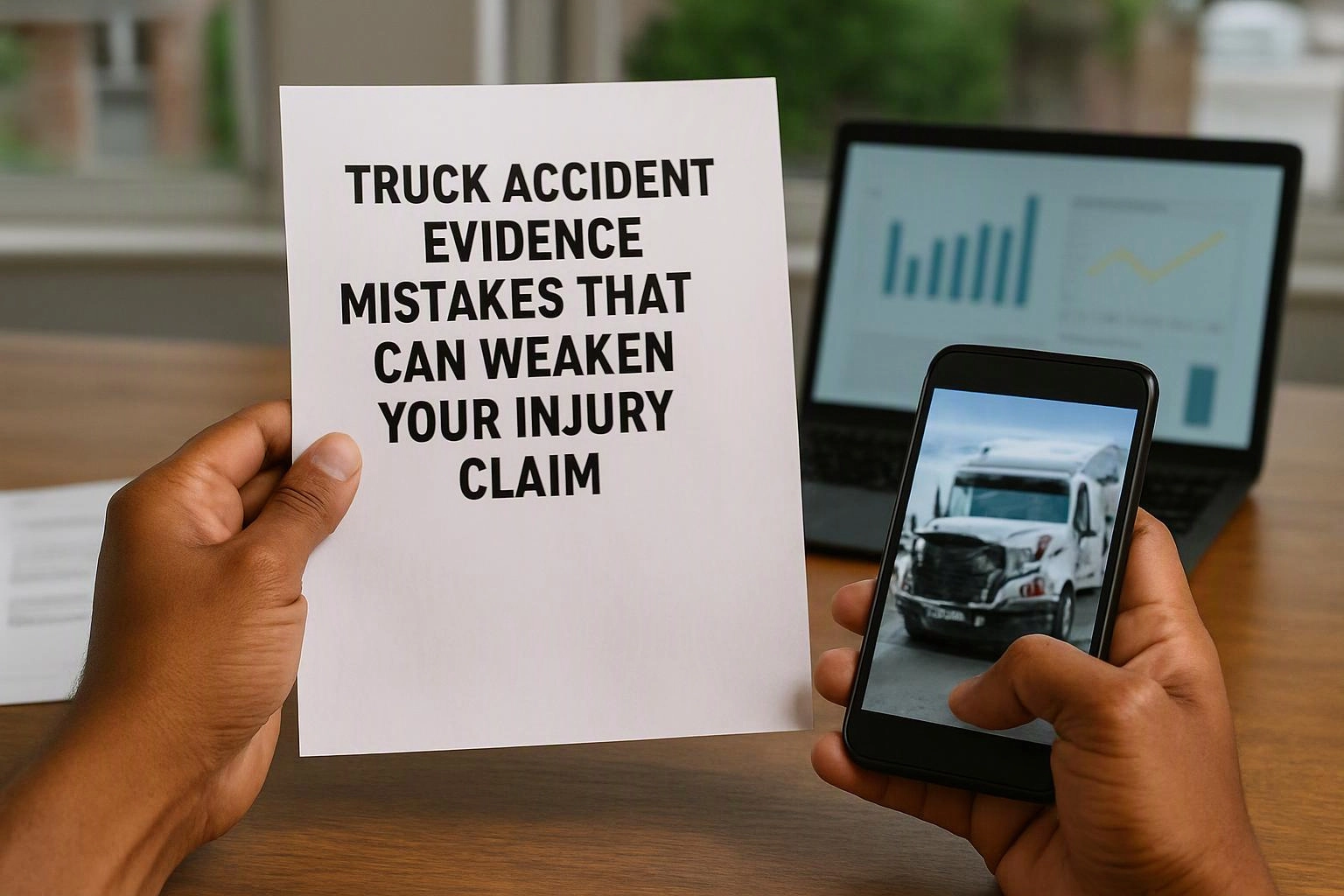
Some evidence cannot be recovered after a vehicle is repaired, a record is overwritten, or a witness becomes unavailable. Contact us when any of these situations apply:
Truck Accident Lawyer support can help when evidence preservation requires organized legal action.
How Atlanta Auto Law Reviews Evidence in a Truck Injury Claim
Atlanta Auto Law reviews crash evidence, trucking records, witness information, medical documentation, and losses to evaluate how the evidence supports an injury claim. We begin with the available facts and identify gaps that may affect liability or damages.
Our claim investigation may include the crash report, scene photographs, vehicle damage, driver records, electronic logging device data, maintenance records, dispatch records, medical records, and treatment notes. We compare those materials with witness accounts and the reported symptom timeline.
We use that review to analyze negligence, causation, liability, and damages. Our team also organizes documentation for medical bills, lost wages, pain and suffering, and future medical needs.
Which Service Fits Your Truck Accident Injuries?
The right legal focus depends on the type of commercial vehicle collision and the injuries involved. We match the evidence review to the liability questions and medical issues raised by the claim.
Atlanta Auto Law can review the crash and help identify the service focus that fits the available evidence.
| Service | When it fits | Evidence focus |
|---|---|---|
| Truck Accident Lawyer | A commercial vehicle collision raises questions about the truck driver, trucking company, or truck condition. | Crash evidence, liability, commercial truck records, witnesses, and damages. |
| Traumatic Brain Injury Lawyer | The crash causes symptoms involving memory, concentration, communication, or other brain functions. | Medical records, symptom changes, treatment needs, work effects, and future care. |
| Spinal Cord Injury Lawyer | The crash causes spinal cord damage, paralysis, loss of function, or significant mobility problems. | Diagnostic records, treatment, rehabilitation, limitations, and future medical needs. |
Questions About Truck Accident Evidence Mistakes
Can social media posts hurt a truck accident claim?
Yes, social media posts can hurt a truck accident claim when photographs or statements appear inconsistent with the reported injuries. Atlanta Auto Law reviews the available context and helps address posts that may affect the insurance investigation.
Should I give the trucking company's insurer a recorded statement?
You should understand the claim and the purpose of the request before giving the trucking company’s insurer a recorded statement. An incomplete answer may later be compared with medical records, witness statements, and other evidence.
What truck company records can support an injury claim?
Truck company records that may support an injury claim include electronic logging device data, driver qualification records, maintenance records, dispatch records, and black box data. These materials may help show driver conduct, vehicle condition, scheduling, or company knowledge.
What should I do if the trucking company has evidence I cannot access?
You should preserve your own records and tell us what evidence the trucking company may control. We identify relevant materials and address evidence preservation concerns during the claim investigation.
Can delayed medical treatment affect a truck accident injury claim?
Yes, delayed medical treatment can affect a truck accident injury claim because the insurer may question causation, severity, or the need for care. Consistent medical records and a clear symptom timeline can help explain the injury and treatment.
Truck accident evidence can disappear or become harder to explain when preservation is delayed. Contact Atlanta Auto Law to discuss the crash, the available records, and the steps needed to protect your injury claim.