Construction Accidents and Workers’ Compensation: When a Third-Party Injury Claim May Also Apply
Construction accident claims may support both workers’ compensation and a third-party injury claim when a non-employer caused or contributed to the harm; Atlanta Auto Law reviews the available claims, responsible parties, and evidence with you.
Get a Free Estimate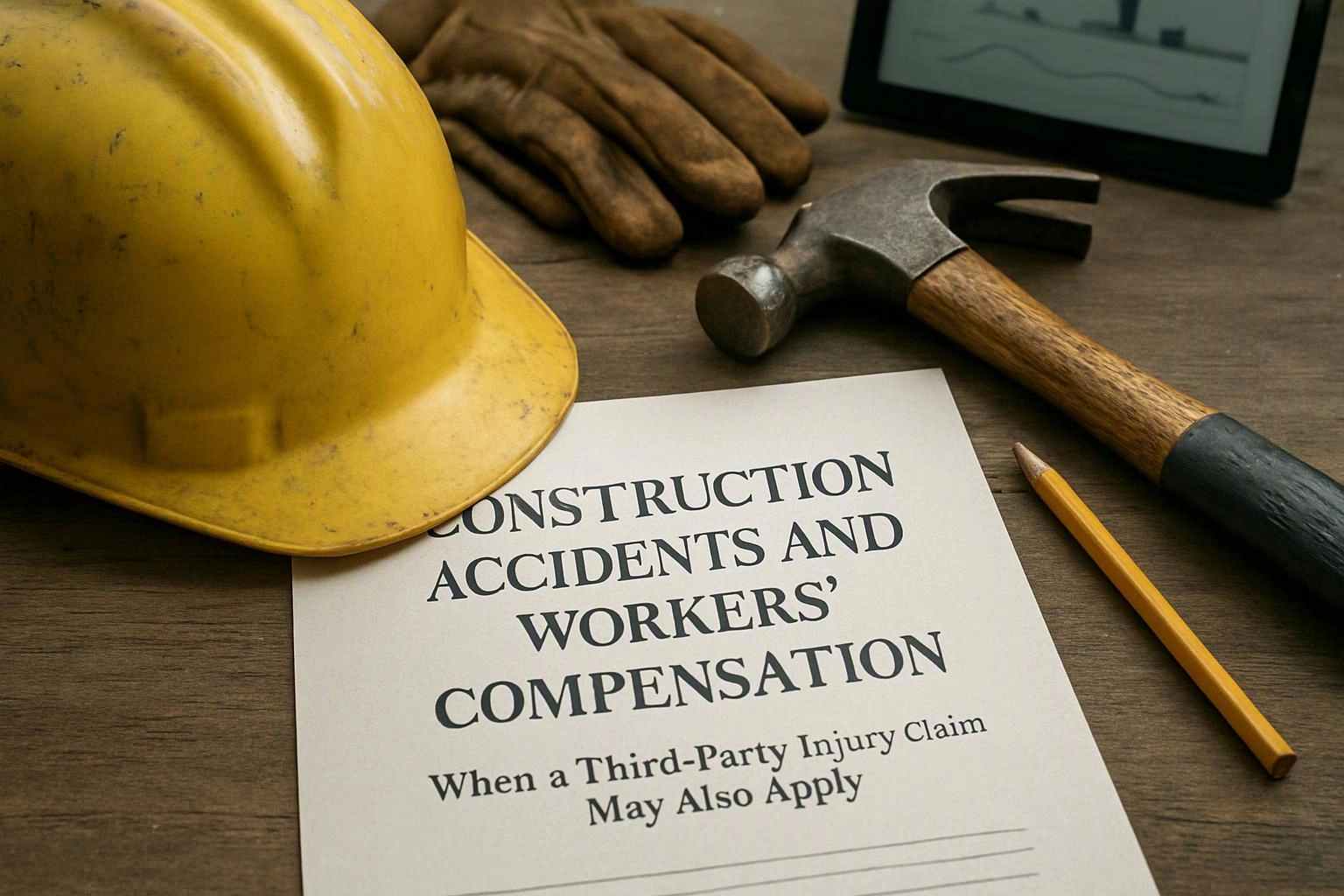
Can You File Workers’ Compensation and a Third-Party Injury Claim?
Yes, an injured construction worker may pursue both claim types when the injury arose during work and a party outside the employer relationship contributed to the accident. Atlanta Auto Law reviews the workers’ compensation claim and the possible third-party personal injury claim together.
Workers’ compensation generally addresses an injury connected to employment, even when proving employer negligence is not required. A third-party injury claim may apply when a negligent party outside the employer relationship caused or contributed to the construction accident.
The employer is usually part of the workers’ compensation process. A general contractor, subcontractor, property owner, equipment manufacturer, or motor vehicle driver may be a separate defendant when the evidence supports negligence.
How Workers’ Compensation and Third-Party Claims Differ
Workers’ compensation benefits and personal injury damages serve different purposes. We compare the claim paths so you can see which losses each legal claim may address.
| Issue | Workers’ compensation | Third-party injury claim |
|---|---|---|
| Responsible party | The employer’s workers’ compensation system handles the work-related injury. | A third party may be liable when negligence caused or contributed to the accident. |
| Medical expenses | The claim may provide medical benefits for covered treatment. | A personal injury claim may seek losses connected to medical care and other damages. |
| Lost wages | The system may provide wage replacement under applicable rules. | A claim may seek lost income and lost earning capacity supported by evidence. |
| Pain and suffering | Workers’ compensation generally focuses on defined benefits. | A personal injury claim may include pain and suffering when allowed by law. |
The two claims can involve different insurers, proof, and legal standards. Our team coordinates the information so one claim does not undermine the other.
When Both Legal Services May Be Needed After a Construction Accident
Both legal services may be needed when the work-related injury also involves a separate party or unsafe condition. The following situations can create a possible third-party liability claim.
Workers’ compensation can address the employment relationship while the third-party claim addresses outside fault. We investigate how each party’s actions connect to the construction injury.
How the Two Claims Work Together
Claim coordination keeps the workers’ compensation claim and third-party liability claim moving with consistent facts. We track the medical, insurance, and liability issues as they develop.
The claims may affect one another even though they are separate legal paths. We review settlement terms carefully so the decision accounts for available benefits, damages, and claim obligations.
What Evidence Can Support Both Claims?
Accident evidence can support both claims when it connects the work-related injury to the people, property, or equipment involved. We preserve and compare the accident report, medical records, witness statements, and site photographs.
Safety records can show what instructions, inspections, and warnings were provided. Equipment maintenance records may reveal a repair issue or repeated hazard.
Employment records can help establish the work relationship, job duties, and lost wages. Insurance records can identify coverage and the parties handling each insurance claim.
Who May Be Responsible for a Third-Party Construction Injury?
A third party may be responsible when its negligence, unsafe property condition, or defective product caused the construction injury. Atlanta Auto Law identifies each possible source of third-party liability and matches it to the available evidence.
A subcontractor or general contractor may face a negligent subcontractor claim when its conduct created a hazard. A property owner may face a premises liability claim when a dangerous condition caused harm.
An equipment manufacturer may face a product liability claim involving defective equipment. An equipment rental company may also be relevant when maintenance, warnings, or equipment condition contributed to the accident.
A motorist may be responsible for a motor vehicle injury claim when a vehicle crash harms a worker or disrupts a construction site. The responsible party depends on the facts, applicable law, and liability evidence.
How Atlanta Auto Law Reviews Both Construction Injury Claims
Atlanta Auto Law reviews both claim paths through a connected investigation of the injury, employment relationship, and possible third-party fault. Our team uses the following process to organize the legal review.
Our review keeps the workers’ compensation claim and third-party injury claim connected without treating them as the same claim. We explain the decisions that affect each legal remedy.
What Can Change the Value of a Third-Party Injury Claim?
The value of a third-party injury claim depends on the injury, documented losses, responsibility for the accident, available insurance coverage, and the evidence supporting liability.
The severity of the injury and the course of medical treatment can affect the damages analysis. Permanent impairment, lost income, lost earning capacity, and future damages may require detailed medical and employment records.
Fault allocation can affect the claim when more than one party contributed to the accident. We also examine available insurance coverage and the strength of the claim evidence before discussing settlement strategy.
What Should You Do After a Construction Accident?
After a construction accident, protect your health, report the incident, preserve evidence, and obtain a legal review before making important claim decisions. The following steps can help preserve both potential claims.
Prompt evidence preservation can help prevent the loss of important liability evidence. We review what happened and explain the next claim decisions.
How We Can Review Your Construction Accident Claims
A construction accident claim review examines workers’ compensation benefits, third-party liability, medical documentation, damages, and available insurance. Our team can help identify whether a general contractor, subcontractor, property owner, equipment company, manufacturer, or motorist may be involved.
Atlanta Auto Law provides access to a construction accident lawyer and workers’ compensation lawyer for a coordinated review. We explain the evidence, claim options, and next steps in clear language.
Free Estimates Available. To request a claim review, contact Atlanta Auto Law through our contact page.
Questions About Construction Accident Claims
Can I sue someone other than my employer after a construction accident?
Yes, a construction accident may support a claim against someone other than the employer when that party’s negligence caused or contributed to the injury. Atlanta Auto Law reviews possible claims against contractors, property owners, equipment companies, manufacturers, and motorists.
Can a subcontractor be liable for a construction worker’s injury?
Yes, a subcontractor may be liable when its negligence or unsafe work creates a hazard that causes a worker’s injury. The evidence must connect the subcontractor’s conduct to the accident and resulting losses.
Can I receive workers’ compensation if another company caused the accident?
Yes, an injured worker may receive workers’ compensation for a covered work-related injury while also pursuing a third-party claim when another company caused the accident. The two claims have different requirements and may involve different insurers.
Do I have to repay workers’ compensation benefits from a third-party settlement?
Repayment or subrogation issues may apply when workers’ compensation benefits were paid and a third-party settlement is later reached. The applicable rules, payment records, and settlement terms determine how the issue is handled.
What happens if my employer and another party both contributed to my construction injury?
The workers’ compensation claim may address the employment-related injury while the third-party claim examines the outside party’s negligence. We review fault allocation, evidence preservation, benefits, damages, and insurance together.