
What Is Gross Negligence?
Gross negligence is conduct that shows a serious disregard for the safety or rights of others. The conduct goes beyond an ordinary mistake or failure to use reasonable care. In a nursing home case, the issue may involve knowing inaction, repeated unsafe practices, or an extreme departure from expected care that contributes to a resident’s harm.
Quick Facts About Gross Negligence
Category
Negligence standard
Used for
Assessing unusually serious misconduct
Common confusion
Ordinary negligence
Often discussed with
Nursing Home Abuse Lawyer
Key Takeaways About Gross Negligence
- The conduct reflects an extreme departure from reasonable care.
- Records and witness accounts may show what staff knew and did.
- Gross negligence is not simply another name for ordinary negligence.
How Gross Negligence Works
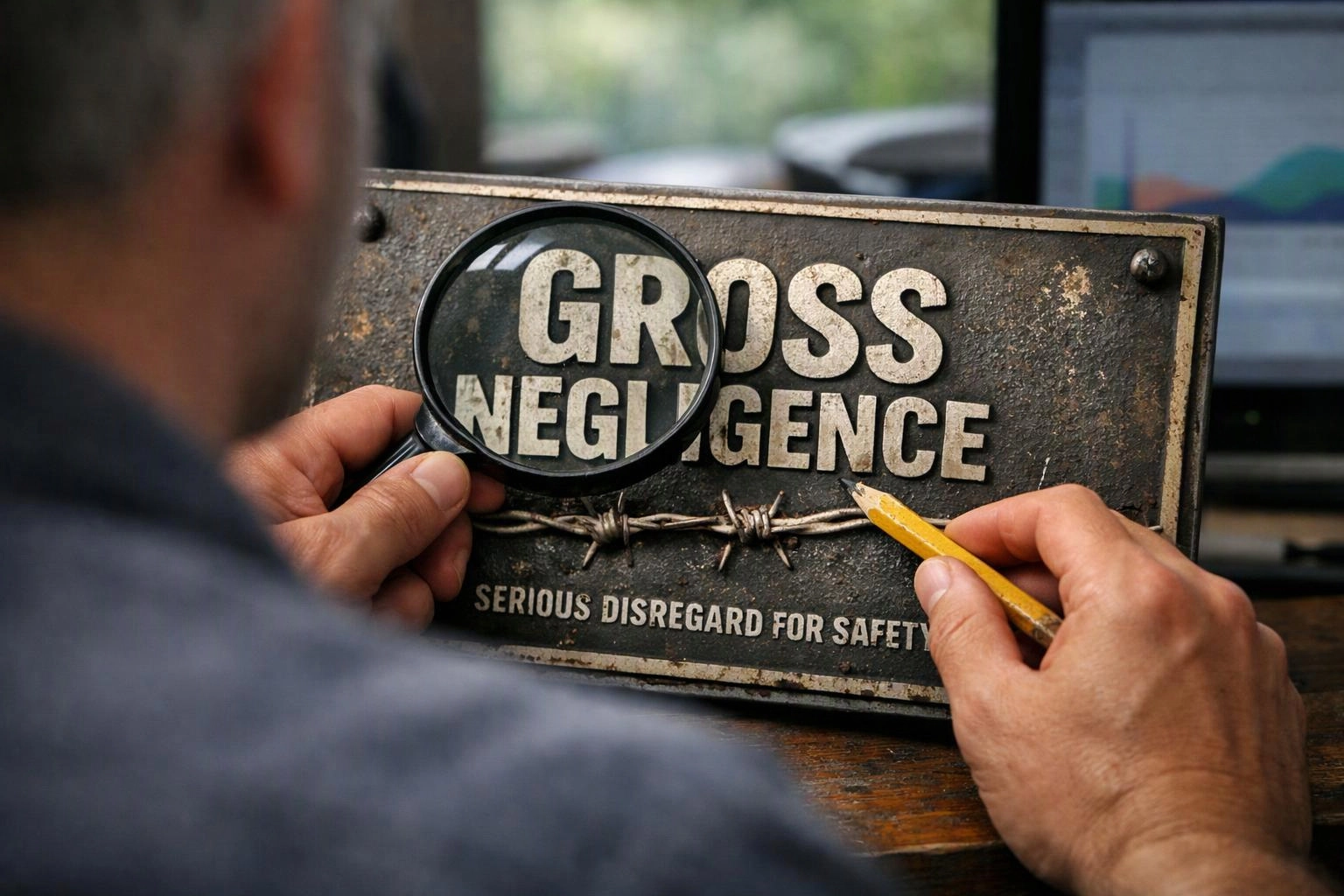
Gross negligence is evaluated by examining the conduct, the known risk, and the connection between that conduct and the resident’s injury. The question is not only whether care fell below an expected level. The facts must show conduct that reflects an especially serious disregard for a resident’s safety.
Related glossary terms: Negligence, Negligence Per Se, Punitive Damages.
In a nursing home abuse case, evidence may include care plans, medication records, incident reports, staffing records, and statements from people who observed the care. A single lapse may support an ordinary negligence claim without meeting the gross negligence standard. Repeated failures after warnings or clear signs of danger may support a stronger argument. Negligence describes a failure to use reasonable care, while punitive damages concern a possible remedy that may depend on separate legal requirements.

From the Atlanta Auto Law team
When we review a nursing home abuse matter, we compare the resident’s condition with the facility’s records, policies, and staff actions. We look for notice of a serious risk, the response to that risk, and evidence connecting the conduct to the resident’s injury.
Gross Negligence in Practice: A Real-World Example
A nursing home learns that a resident repeatedly attempts to leave an unsafe bed area but does not follow the care plan or address the known risk. The resident later falls and suffers an injury, creating facts that may support a gross negligence claim.
Related Services
Related Terms
Negligence
Negligence is a failure to use the level of care that a reasonably careful person would…
Negligence Per Se
Negligence Per Se is a legal doctrine that may establish a breach of the duty of…
Punitive Damages
Punitive Damages are money awarded to punish especially wrongful conduct and discourage similar behavior. They differ…
Causation
Causation is the connection between an act or event and the harm that follows. In a…
Atlanta Auto Law
Have Questions About Gross Negligence?
Contact Atlanta Auto Law for practical guidance on Gross Negligence and related personal injury attorney work in Decatur.