
What Is Cauda Equina Syndrome?
Cauda Equina Syndrome is a serious condition caused by compression of the bundle of nerve roots at the lower end of the spinal canal. The compression can affect sensation, leg movement, and bladder or bowel function. In injury claims, medical records help connect the syndrome to a crash, fall, or other harmful event.
Quick Facts About Cauda Equina Syndrome
Category
Lower-spine nerve-root condition
Used for
Describing serious spinal injury effects
Common confusion
Often confused with spinal cord damage
Also called
CES, Cauda Equina Compression
Often discussed with
Spinal Cord Injury Claims
Key Takeaways About Cauda Equina Syndrome
- The affected nerves sit below the spinal cord.
- Medical records connect symptoms to the underlying injury.
- It is not the same as a typical herniated disc.
How Cauda Equina Syndrome Works
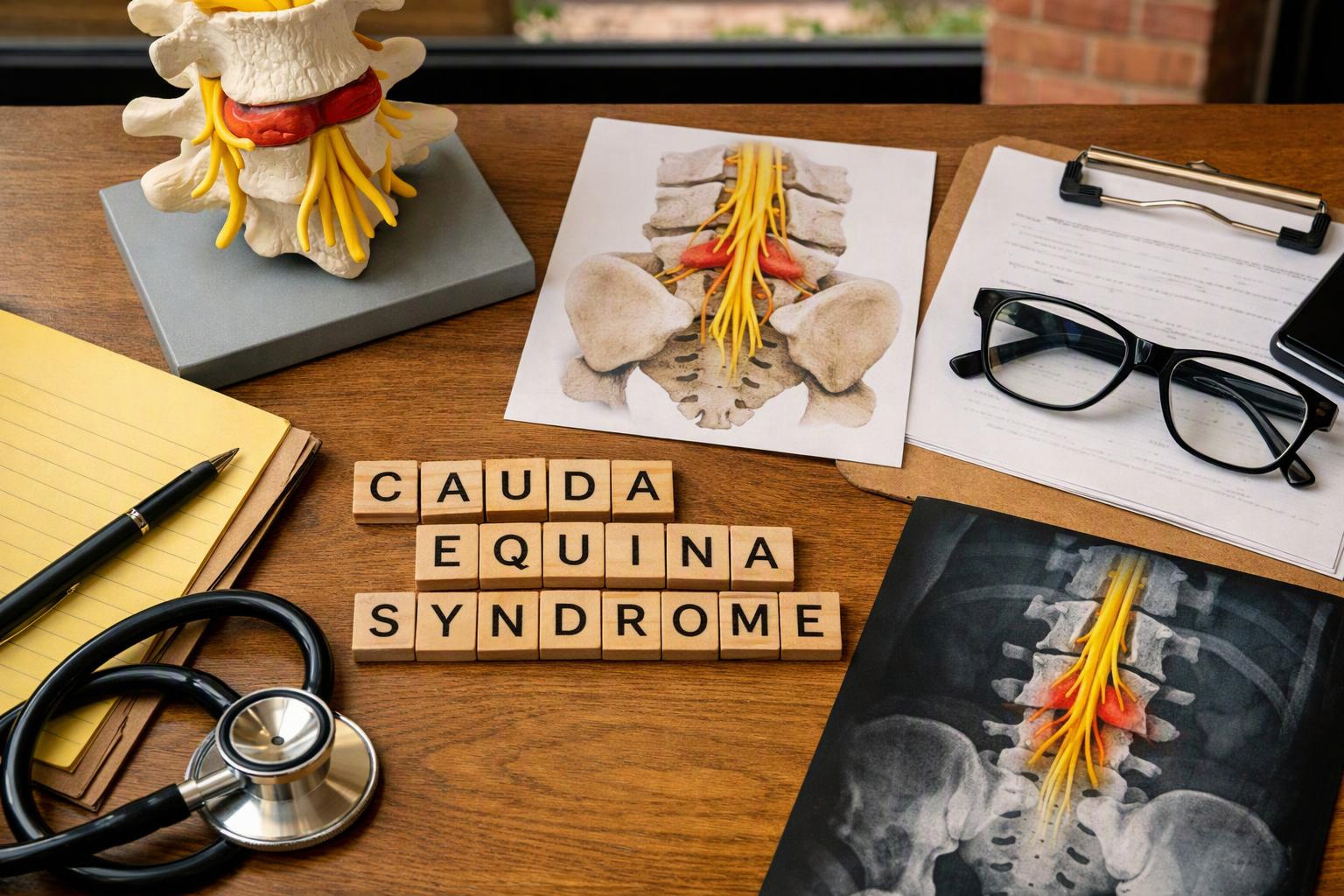
Cauda Equina Syndrome develops when pressure affects the nerve roots gathered near the lower end of the spinal canal. These nerves carry signals between the lower body and the brain. Pressure can change sensation or movement in the legs and can affect bladder, bowel, or sexual function.
Related glossary terms: Herniated Disc, Medical Records, Future Medical Expenses.
Doctors assess the condition through reported symptoms, physical findings, medical history, and diagnostic imaging. A herniated disc may cause the pressure, but other spinal injuries or masses can also contribute. The diagnosis matters in a claim because the records may show when symptoms began, what damage doctors found, and how the condition affected daily activities.
From the Atlanta Auto Law team
When we review a spinal cord injury claim, we compare the medical timeline with crash reports, imaging, and treatment records. We look for clear evidence of the symptoms, the suspected cause, and the effect on work, mobility, and daily life.
Cauda Equina Syndrome in Practice: A Real-World Example
A driver suffers a lower-back injury in a collision and later develops leg weakness, numbness, and changes in bladder control. The claim may rely on imaging and medical records to show whether Cauda Equina Syndrome resulted from the crash.
Related Services
Related Terms
Herniated Disc
A herniated disc is a spinal injury in which the soft inner material of a disc…
Medical Records
Medical Records are written, electronic, and recorded details about a person's care, including symptoms, examinations, diagnoses…
Future Medical Expenses
Future Medical Expenses are the expected costs of medical care a person may need after an…
Atlanta Auto Law
Have Questions About Cauda Equina Syndrome?
Contact Atlanta Auto Law for practical guidance on Cauda Equina Syndrome and related personal injury attorney work in Atlanta.