
What Is Anoxic Brain Injury?
Anoxic Brain Injury is a brain injury caused by a complete lack of oxygen reaching brain tissue. The injury can follow events such as cardiac arrest, drowning, suffocation, or severe breathing failure. The affected brain areas and the length of oxygen deprivation can influence physical, cognitive, emotional, and behavioral changes.
Quick Facts About Anoxic Brain Injury
Category
Acquired brain injury
Used for
Describing oxygen-related brain damage
Common confusion
Often confused with traumatic brain injury
Also called
Anoxic encephalopathy, Cerebral anoxia
Often discussed with
Brain Injury Claims, Car Accident Claims
Key Takeaways About Anoxic Brain Injury
- Oxygen loss distinguishes anoxic injury from many impact-related brain injuries.
- Symptoms may affect cognition, movement, communication, or emotional control.
- Anoxic injury is not the same as a concussion.
How Anoxic Brain Injury Works
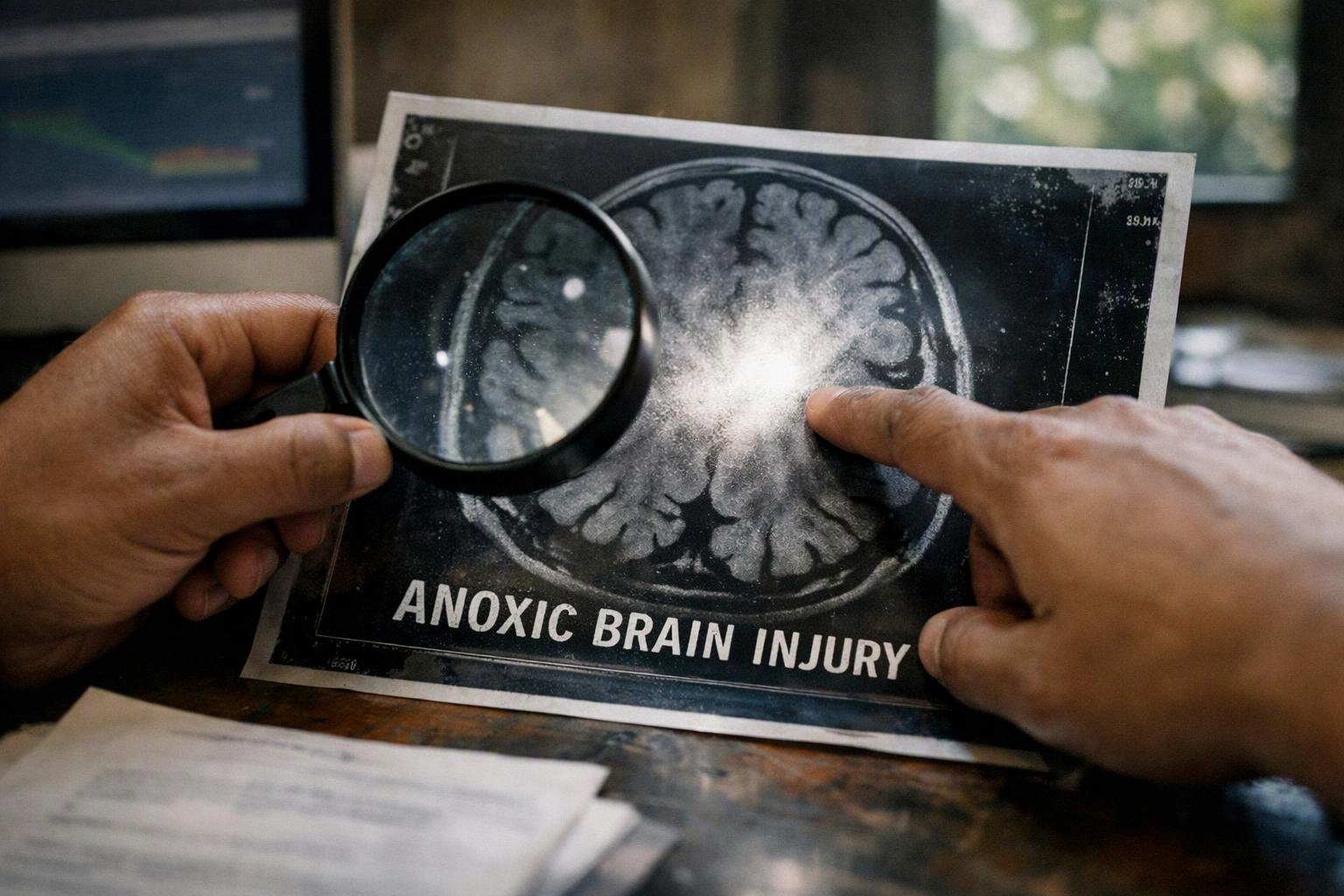
Anoxic brain injury develops when brain tissue does not receive the oxygen it needs. Oxygen loss can occur during cardiac arrest, drowning, suffocation, or a serious breathing problem. Brain cells can become damaged, and the effects may appear in thinking, memory, speech, movement, mood, or awareness.
Related glossary terms: Medical Records, Future Medical Expenses, Expert Witness.
Medical professionals assess the injury through the person’s history, neurological examinations, brain imaging, and other clinical records. Hypoxic brain injury involves reduced oxygen, while anoxic injury describes a more complete oxygen interruption. In a legal claim, medical records can connect the oxygen-loss event with the person’s symptoms, treatment needs, and changes in daily function. A traumatic brain injury usually results from an external force, although both conditions can occur during the same incident.
From the Atlanta Auto Law team
When we review anoxic brain injury claims, we compare the incident records with emergency care, neurological findings, imaging, and later treatment records. We also examine how cognitive or physical changes affect work, daily activities, communication, and future care needs. This process helps separate documented injury effects from unrelated conditions.
Anoxic Brain Injury in Practice: A Real-World Example
A driver suffers cardiac arrest after a collision and remains without normal oxygen circulation until emergency treatment begins. Later records show memory problems, impaired balance, and a need for help with routine activities.
Related Services
Related Terms
Medical Records
Medical Records are written, electronic, and recorded details about a person's care, including symptoms, examinations, diagnoses…
Future Medical Expenses
Future Medical Expenses are the expected costs of medical care a person may need after an…
Expert Witness
An expert witness is a qualified professional who offers specialized knowledge to help explain technical issues…
Atlanta Auto Law
Have Questions About Anoxic Brain Injury?
Contact Atlanta Auto Law for practical guidance on Anoxic Brain Injury and related personal injury attorney work in Atlanta.